

Why Your Sofa Feels Wrong (and How Cushion Depth and Frame Height Are Usually to Blame)

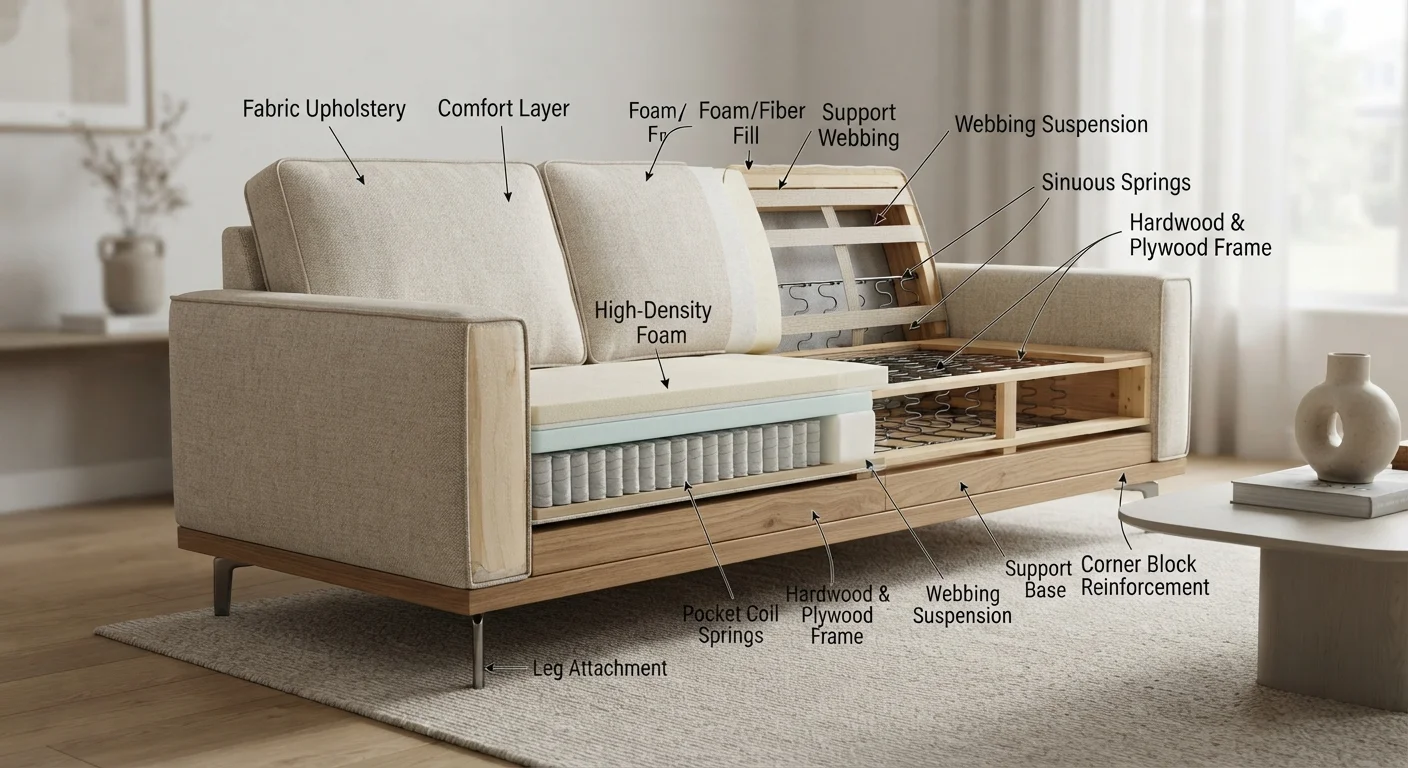
Photo: signaturehomeideas.com editorial
Key Takeaways
- Seat depth over 24 inches forces shorter adults into a slouch or perch position.
- A frame seat height below 17 inches makes standing up difficult, especially for older adults.
- Back cushion height should support the lumbar region, not just the shoulder blades.
- Cushion fill density determines how a sofa feels after months of use, not just on the showroom floor.
- Measuring your body proportions before shopping prevents most sofa comfort problems.
Why the problem is almost never the fabric
Most people who feel uncomfortable on a sofa blame the upholstery. They think a firmer weave or a softer velvet will fix the problem. In most cases, the fabric has nothing to do with it. The discomfort comes from two structural factors: seat depth (how far back the cushion sits from the front edge) and frame height (how high the seat sits off the floor). When either measurement is wrong for your body, no amount of throw pillows will compensate.
Seat depth and frame height are fixed once you own the piece. Cushion fill can be replaced over time, but the frame dimensions are permanent. Getting those dimensions right at the start saves significant frustration and expense.
Choosing a sofa based on appearance without sitting in it for at least five minutes.
Assuming a deep seat is always more comfortable.
Ignoring back cushion height when evaluating lumbar support.
Replacing worn cushion fill with the same low-density foam.
Placing a sofa against the wall to gain back support.
How to measure for your body before buying
Sit in a straight-backed chair and measure from the back of your knee to the back of your seated thigh. That number is your ideal maximum seat depth. For most adults, it falls between 20 and 22 inches. A sofa with a 26-inch seat depth will leave shorter people either perching on the edge or sliding their back away from the cushion entirely, losing lumbar support.
Frame height matters just as much. Sit down and check whether your hips are level with or slightly above your knees. If your knees sit higher than your hips, the seat is too low. Seats below 17 inches off the floor are common in low-profile contemporary designs and can make standing up genuinely difficult, particularly for anyone with knee or hip concerns.
Back height is the third measurement to check. The top of the back cushion should reach at least to your shoulder blades when seated. A back that only reaches mid-back forces the spine into extension and causes fatigue within 20 to 30 minutes.
Low seats and joint strain
What cushion fill does and does not fix
Cushion fill affects initial softness and long-term shape retention. High-density foam (at or above 1.8 lb per cubic foot) holds its shape longer than low-density alternatives. Feather-wrapped foam cores feel luxurious at first but compress quickly and require frequent redistribution. Down-only cushions sink deeply, which can worsen the seat-too-deep problem for people who are already borderline.
Fill cannot correct a frame that is the wrong size for your body. If you sit on a sofa and your feet barely touch the floor, a firmer cushion will not raise you enough to matter. The fix in that case is a sofa with a taller frame, or the addition of a dense platform riser under the legs, which some furniture repair specialists can install.
When replacing cushion fill in a sofa you already own, measure the current foam thickness before ordering a replacement. Going thicker raises the effective seat height slightly, which can be an advantage if the frame sits low. Going thinner has the opposite effect.
This article is for informational purposes only. Consult a furniture professional for structural modifications to your sofa frame.
The content provided on our blog site traverses numerous categories, offering readers valuable and practical information. Readers can use the editorial team’s research and data to gain more insights into their topics of interest. However, they are requested not to treat the articles as conclusive. The website team cannot be held responsible for differences in data or inaccuracies found across other platforms. Please also note that the site might also miss out on various schemes and offers available that the readers may find more beneficial than the ones we cover.