

Mixing Furniture Styles Without the Room Feeling Like a Showroom Accident

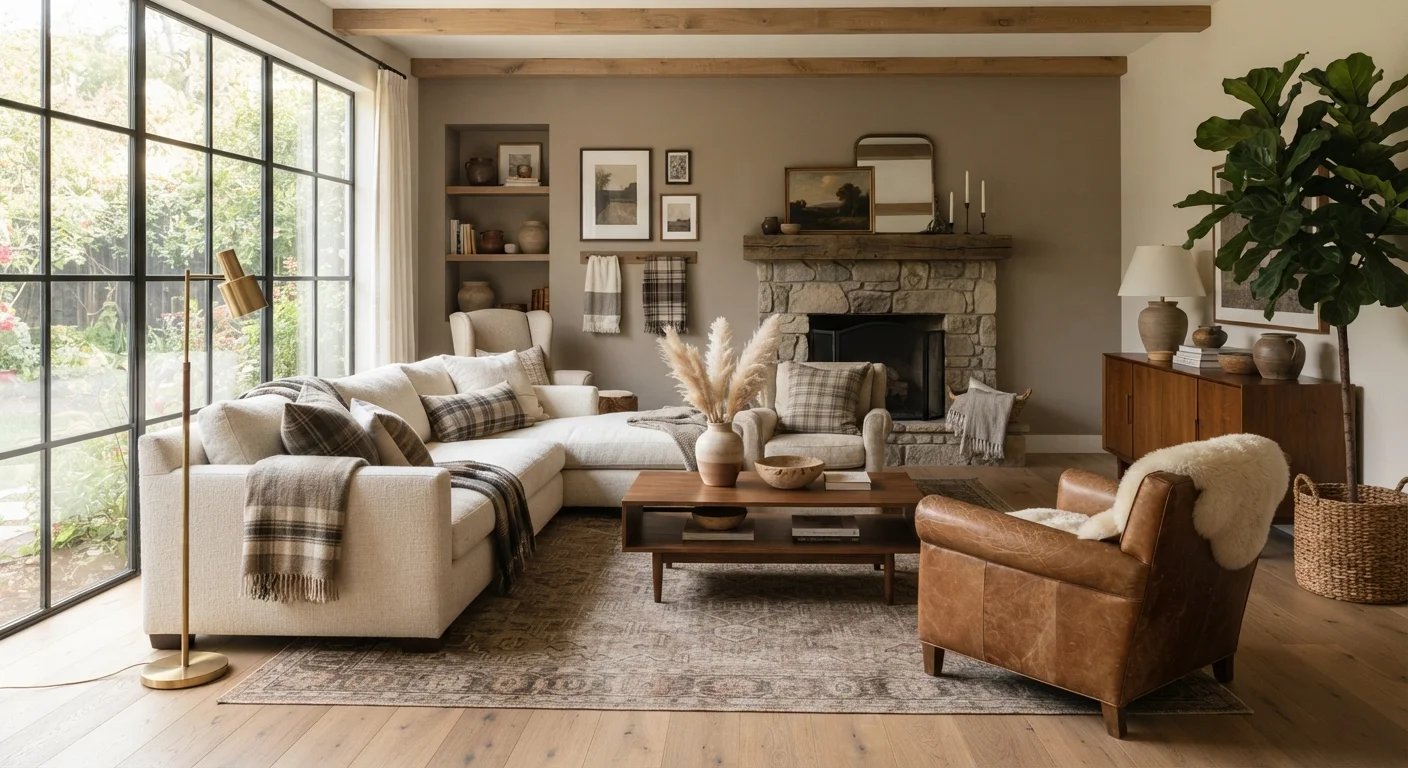
Photo: signaturehomeideas.com editorial
Key Takeaways
- Shared finish tones or wood stains connect pieces from different style families without matching them.
- Visual weight matters more than style category: balance heavy pieces with lighter ones across the room.
- Repeating one color, texture, or material at least three times gives the eye a pattern to follow.
- Anchor the room with one dominant style, then layer secondary styles as accents, not rivals.
- Scale consistency prevents clashing more reliably than matching period or aesthetic.
Why mixed-style rooms go wrong
Most rooms that feel chaotic share one problem: every piece competes for attention at the same volume. A Victorian side table next to a Scandinavian sofa next to an industrial shelving unit can work, but only if something quieter connects them. Without that thread, the eye bounces and never lands anywhere comfortable.
The fix is rarely about buying new furniture. It is about identifying what the pieces already have in common and amplifying it. Before you move anything, do a quick inventory: note the wood tones, metal finishes, leg styles, and upholstery weight already in the room. That list tells you which bridge materials to use and which new additions would break the connection. See the room styling checklist for a thorough pre-project audit that covers light, scale, and traffic patterns too.
The practices that make mixed styles read as deliberate
Each of the following practices targets a specific reason rooms feel accidental rather than composed. Apply two or three consistently and the room will read as intentional even if no two pieces share an era.
Choose one dominant style and let the others support it
Unify finishes before unifying styles
Repeat one material or texture at least three times
Match leg styles within seating groups
Use rugs and textiles as the translation layer between styles
Visual weight and scale
Style period matters less than the physical presence a piece commands. A chunky reclaimed-wood coffee table sitting in front of a slim, low-profile sofa creates imbalance regardless of whether both are technically "rustic" or technically "modern." Train your eye to see mass, height, and leg thickness as the real variables.
A practical test: stand at the doorway and squint. Pieces that feel too heavy on one side of the room need a counterweight, either a similarly substantial piece on the opposite wall or a cluster of smaller items that add up to the same visual mass. This principle applies across open-plan spaces too; the open-plan living room furniture zoning guide covers how to use weight distribution to define zones without physical dividers.
When to stop adding and start editing
Mixed-style rooms fail at the addition stage more often than the selection stage. Once the anchor piece is in place and two or three supporting styles have been layered in, further additions dilute the connection rather than deepen it. A room with four distinct style families almost always reads as unresolved.
If the room still feels off after applying finish consistency and scale balance, the problem is usually one piece that pulls too hard in its own direction. Remove it temporarily and see whether the room settles. If it does, that piece either needs a companion that shares its finish or material, or it belongs in a different room entirely. The room-by-room furniture refresh checklist walks through a systematic way to evaluate each piece before spending anything new.
Rearranging what you already own is also worth trying before any purchase. A piece that looks out of place in one position often works better pulled away from the wall or rotated to face a different focal point. The furniture rearranging guide covers focal points and traffic flow in detail.
The content provided on our blog site traverses numerous categories, offering readers valuable and practical information. Readers can use the editorial team’s research and data to gain more insights into their topics of interest. However, they are requested not to treat the articles as conclusive. The website team cannot be held responsible for differences in data or inaccuracies found across other platforms. Please also note that the site might also miss out on various schemes and offers available that the readers may find more beneficial than the ones we cover.