

Statement Walls: Paint, Wallpaper, Shiplap, and Beyond

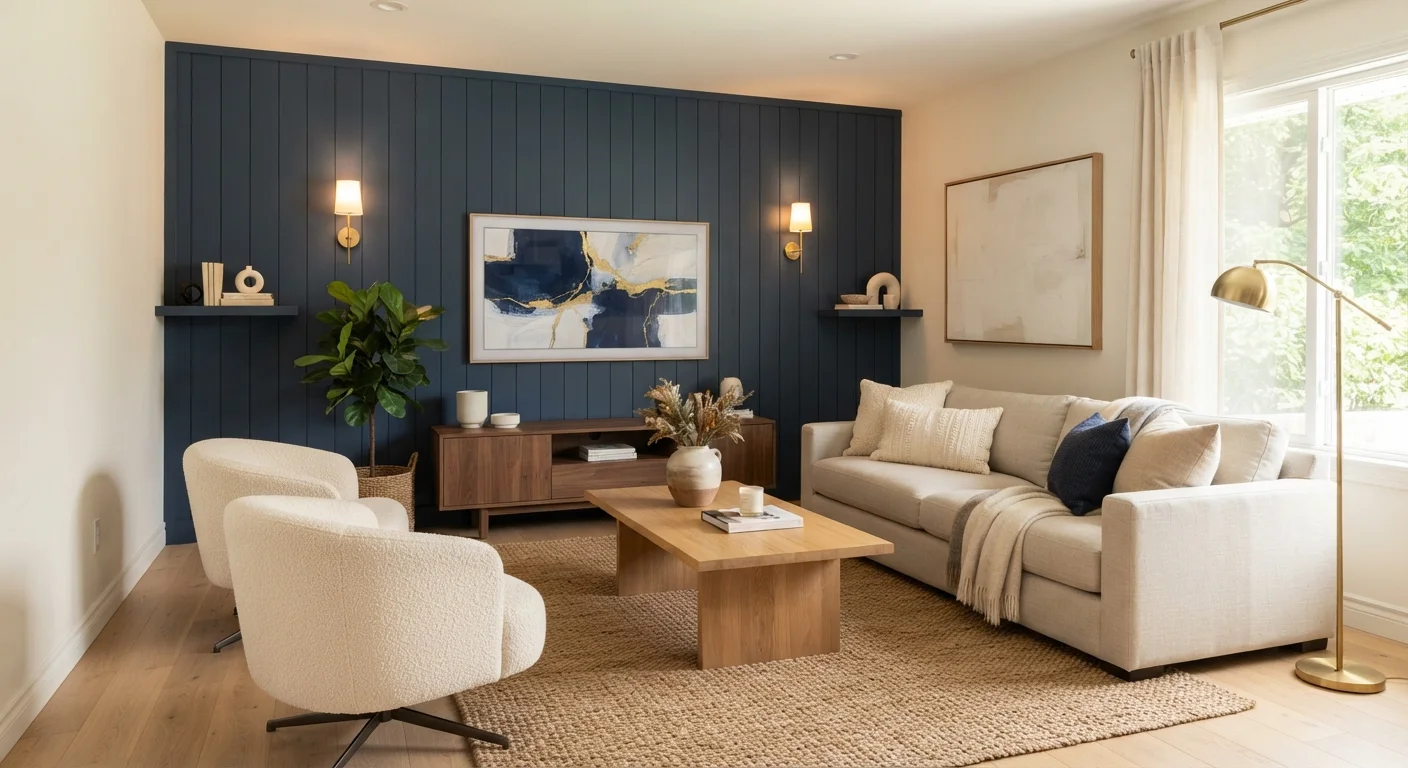
Photo: signaturehomeideas.com editorial
What makes a wall a statement wall
An accent wall draws attention to one surface in a room, giving it visual weight that the other walls do not carry. The goal is contrast: in color, texture, pattern, or all three. Done well, a single treated wall can define a room's character without repainting or remodeling everything around it.
The right treatment depends on four practical factors: your skill level, your budget, how permanent you want the result to be, and the wall's condition. A wall with uneven drywall, for example, will show every bump under smooth wallpaper but can hide imperfections behind textured planks.
Paint: the most flexible option
Paint remains the easiest treatment to apply, adjust, and undo. A single accent wall in a saturated color or a deep neutral takes one to two gallons and a weekend afternoon. Techniques like color-blocking, geometric tape patterns, and limewash finishes push paint further without adding materials cost.
Limewash paint deserves a specific mention. It is applied with a brush in overlapping strokes to create an aged, mottled finish that reads as texture even though the wall surface stays flat. The technique takes some practice on a test patch before committing to the full wall.
The main limitation of paint is that it cannot add physical depth. If you want a wall that casts shadows and feels dimensional, paint alone will not get there.
Test your color before committing
Peel-and-stick wallpaper: renter-friendly pattern
Peel-and-stick wallpaper uses a repositionable adhesive backing. Panels align at pattern repeats the same way traditional wallpaper does, but you can lift and reposition a panel during installation without damaging the wall beneath. Most manufacturers state that their products remove cleanly from standard painted drywall, though results can vary by wall condition and how long the paper has been up.
Pattern scale matters more than most beginners expect. A large botanical or geometric repeat looks striking in a photo but can feel oppressive in a small room. In rooms under 150 square feet, a smaller repeat or a textural print (linen, grasscloth simulation) tends to read better.
Traditional pasted wallpaper is also worth considering for permanent installs. It offers a wider pattern library and, once dry, a harder surface. Hanging it is more involved: you need paste, a water tray, and careful seam alignment. If you have never hung wallpaper before, practice on a low-stakes wall first.
| Paint | Peel-and-stick wallpaper | Traditional wallpaper | Shiplap | Board-and-batten | |
|---|---|---|---|---|---|
| Skill level needed | Beginner | Beginner to intermediate | Intermediate | Intermediate | Intermediate |
| Permanence | Low (repaint anytime) | Low (removable) | High | High | High |
| Renter-friendly | With landlord approval | Yes | No | No | No |
| Adds physical texture | No (unless specialty finish) | No | No | Yes | Yes |
| Wall prep required | Minimal | Smooth, clean surface | Smooth, primed surface | Minimal | Minimal |
| Pattern or design range | Unlimited via color | Wide | Widest | Limited to plank style | Limited to panel style |
| Typical DIY time for one wall | 2 to 4 hours | 3 to 5 hours | Half day or more | Full day | Full day |
Shiplap and board-and-batten: dimensional wood treatments
Shiplap consists of overlapping horizontal boards with a small reveal gap between each course. The result is a lined, slightly shadowed surface that reads as texture from across the room. Board-and-batten uses vertical boards (the battens) spaced evenly over a flat backing to create a grid or panel effect.
Both treatments are installed with a nail gun and construction adhesive over an existing wall. The boards are typically made from MDF (medium-density fiberboard) or pine. MDF is stable and takes paint well; pine shows more grain character if you prefer a wood-toned finish.
The carpentry skill required is moderate. You need accurate measurements, a miter saw for clean cuts, and patience with the nailing pattern. A poorly leveled first board will compound errors all the way across the wall. Take time to snap a level chalk line before you start.
Neither treatment requires a permit in most jurisdictions because they attach to the wall surface without altering structure. However, always check local building codes if your project involves any electrical outlet relocation or wall penetration.
Choosing the right treatment for your room
Start with the wall's condition. Rough or patched drywall is a poor base for smooth wallpaper. If skim-coating the wall is not in your plans, a wood treatment or a heavily textured paint finish will hide the imperfections better.
Consider reversibility. Renters should default to peel-and-stick or removable options. Homeowners planning to sell within a few years may want to weigh whether a bold choice will read as an asset or a liability to future buyers, since tastes vary.
Budget plays a role, but not always in the direction people expect. A gallon of specialty limewash paint can cost more per square foot than basic peel-and-stick panels. Compare the total material cost for your specific wall dimensions before assuming one category is cheaper than another.
The content provided on our blog site traverses numerous categories, offering readers valuable and practical information. Readers can use the editorial team’s research and data to gain more insights into their topics of interest. However, they are requested not to treat the articles as conclusive. The website team cannot be held responsible for differences in data or inaccuracies found across other platforms. Please also note that the site might also miss out on various schemes and offers available that the readers may find more beneficial than the ones we cover.