

Cleaning Schedules That Actually Stick

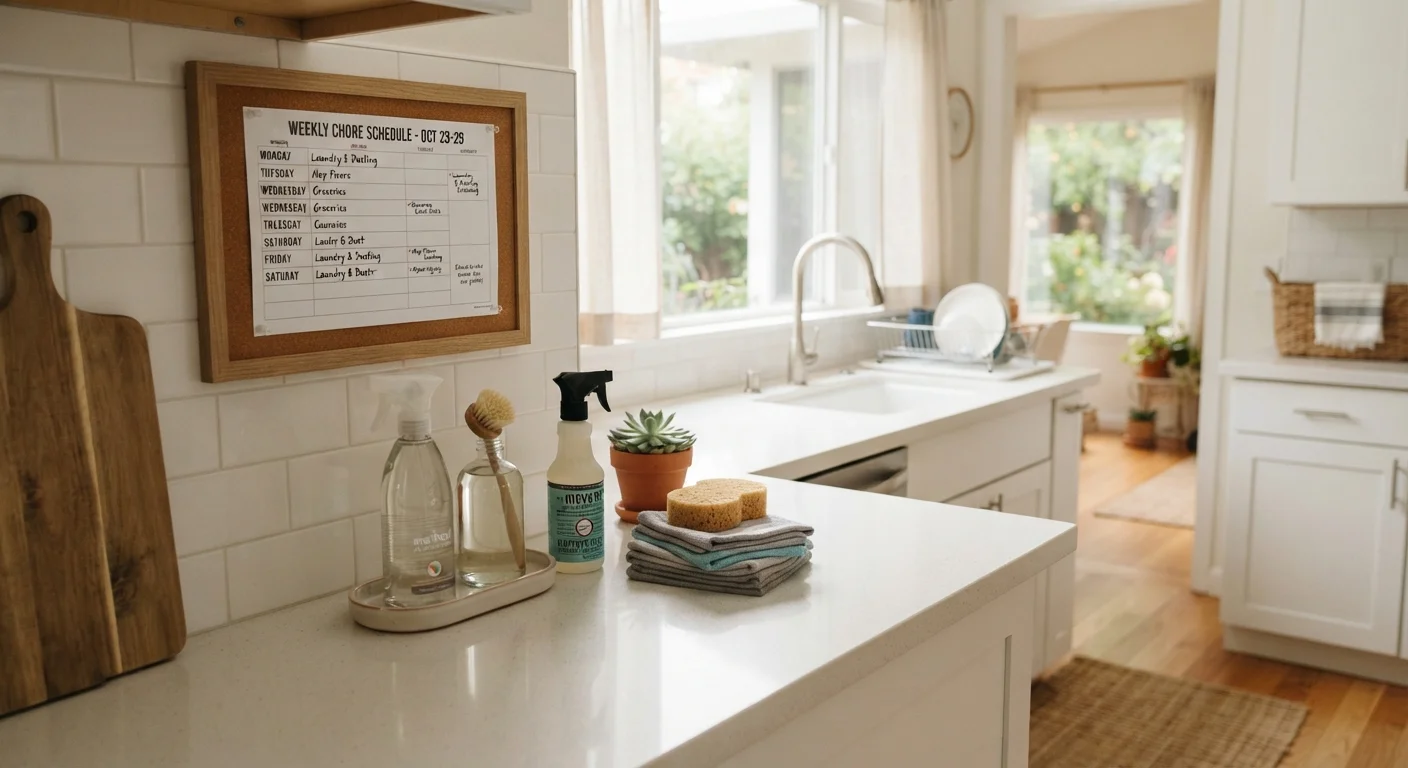
Photo: signaturehomeideas.com editorial
Key Takeaways
- A cleaning schedule works best when built around your actual home size and daily habits.
- Splitting tasks into daily, weekly, and monthly tiers prevents any single session from becoming overwhelming.
- Anchor cleaning tasks to existing routines to reduce the effort needed to start.
- Written schedules outperform mental ones because they remove the need to decide what comes next.
- Adjusting your schedule every few months keeps it realistic as your life changes.
Why cleaning schedules fail
Most cleaning schedules fail for the same reasons: they are built around an ideal home rather than a real one, they pack too many tasks into too few days, and they have no mechanism to restart after a disruption. A schedule that treats one skipped day as a reason to abandon the whole plan will not last past the first missed week.
The fix is not more discipline. A schedule that requires constant willpower to maintain is a poorly designed schedule. The goal is to reduce the number of decisions you have to make in the moment, so cleaning happens because the system is clear, not because you summoned extra motivation.
What you will need
Building your schedule
The steps below take you from a blank page to a written, posted schedule you can start using this week. Work through them in order; each step builds on the one before.
List every cleaning task in your home
Walk through each room and write down every task you can think of, from wiping counters to scrubbing grout. Do not sort or filter yet. The goal is a complete, honest inventory of what your home actually needs, not an idealized version of it.
Include tasks you currently skip. Seeing them on paper helps you decide later whether they belong on a regular schedule or only need occasional attention.
Sort tasks by frequency tier
Divide your list into three groups: daily, weekly, and monthly. Use these rough guidelines:
- Daily: Tasks that create health or safety issues if skipped, such as wiping kitchen surfaces, washing dishes, and a quick bathroom wipe-down.
- Weekly: Tasks that stay manageable with a once-a-week cadence, such as vacuuming, mopping floors, and cleaning toilets.
- Monthly: Tasks where buildup is slow, such as cleaning appliance interiors, washing windows, and wiping down cabinet fronts.
Some tasks will not fit neatly. A task done every two weeks is fine; assign it to whichever tier is closest, and note the actual interval beside it.
Attach tasks to existing habits
Habit stacking, pairing a new behavior with something you already do reliably, is one of the more practical tools for building consistency. Identify two or three anchor habits you do every day without thinking: making coffee, brushing your teeth, loading the dishwasher after dinner.
Attach a short cleaning task to each anchor. Wiping the stovetop after cooking, for example, takes under two minutes when done while the pan is still warm. It requires no extra trip to the kitchen and no separate decision to start.
Assign weekly tasks to specific days
Pick a day for each weekly task based on how your week actually flows, not how it looks in theory. If Saturday mornings are consistently free, that is when heavier tasks like mopping belong. If Wednesday evenings are reliably quiet, assign bathroom cleaning there.
Spread tasks across the week rather than grouping everything on one day. One concentrated cleaning day feels manageable in planning but tends to get postponed when life intervenes, leaving the entire week's work undone.
Write the schedule down and post it visibly
A mental schedule depends on memory and willpower at the moment a task is due. A written schedule removes both variables. Post it somewhere you look daily: inside a cabinet door, on the refrigerator, or on a whiteboard in a utility area.
Digital options work too. A recurring reminder in a calendar app or a task manager with checkboxes gives the same benefit. The format matters less than whether you will actually see it.
Review and adjust every two to three months
A schedule that fit your life in January may not fit it in April. Review your schedule regularly and adjust task frequency, timing, or assignment based on what is consistently getting done and what is not.
If a task sits undone for several weeks in a row, that is information. Either the time slot is wrong, the task is grouped with too many others, or the frequency is unrealistic. Adjust one variable at a time to isolate the problem.
For rooms that accumulate grease, spills, and odors faster than others, a dedicated deep-clean approach is worth planning separately. The room-by-room kitchen deep-clean guide covers surfaces and appliances that a routine schedule typically misses.
Choosing what to clean with
A schedule is only as useful as the supplies backing it up. Keep your cleaning caddy stocked so that when a task is due, you are not hunting for the right product. A shortage of supplies is a reliable schedule-stopper.
If you are weighing whether to use conventional or natural cleaners, the choice affects how well certain tasks get done. Disinfection, grease removal, and mold treatment each have different chemistry requirements. The comparison of natural and conventional cleaners walks through where each type performs well and where it falls short.
The two-minute rule for daily tasks
The content provided on our blog site traverses numerous categories, offering readers valuable and practical information. Readers can use the editorial team’s research and data to gain more insights into their topics of interest. However, they are requested not to treat the articles as conclusive. The website team cannot be held responsible for differences in data or inaccuracies found across other platforms. Please also note that the site might also miss out on various schemes and offers available that the readers may find more beneficial than the ones we cover.