

Upholstery Fabrics Decoded: A Practical Guide for Everyday Households

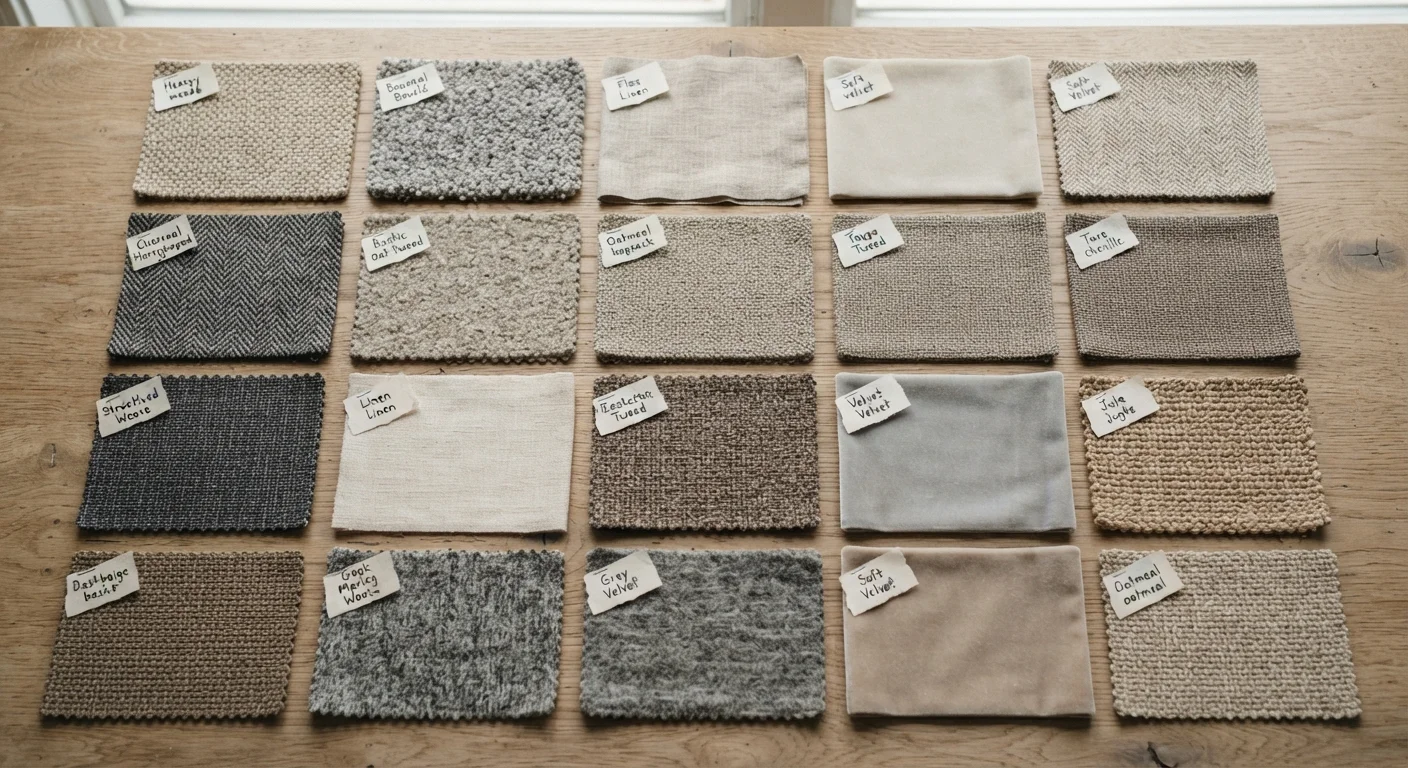
Photo: signaturehomeideas.com editorial
What fabric specs actually mean
When shopping for upholstery fabric or evaluating a furniture purchase, two numbers matter most: the double rub count and the thread count. The double rub count measures abrasion resistance. One double rub simulates a person sitting down and standing up. A fabric rated at 15,000 double rubs is adequate for occasional-use pieces; anything above 30,000 is considered heavy-duty and appropriate for daily seating. Thread count indicates how tightly a fabric is woven, which affects both feel and longevity.
Fabric content, listed as a percentage breakdown of fibers, tells you what you're working with before the first spill happens. A label reading "100% polyester" behaves very differently from "55% linen, 45% cotton" in terms of stain resistance, fading, and how the fabric breathes.
Double rub count
A standardized test measuring how many back-and-forth rubs a fabric withstands before showing wear. Higher counts indicate greater abrasion resistance.
Solution-dyed acrylic
A synthetic fiber where pigment is added during fiber production rather than applied afterward. The result resists fading from sunlight and repeated cleaning.
Pile
The raised loops or cut fibers on a fabric surface, as seen in velvet or chenille. Pile affects texture, appearance, and how easily the fabric traps debris.
Cleaning code
A label tag on upholstered furniture that specifies safe cleaning methods: W (water), S (solvent), W/S (either), or X (vacuum only).
Thread count
The number of threads per square inch of fabric. A higher count generally means a tighter weave and a smoother, more durable surface.
Faux leather
A synthetic material designed to resemble genuine leather, typically made from polyurethane or PVC. It is easier to clean than leather but may peel or crack over time with heavy use.
Common upholstery fabrics and their properties
Cotton and linen are natural fibers that feel comfortable and look casual. Cotton is soft and dyes well, but it wrinkles and stains more easily than synthetics. Linen has a natural texture and good breathability, though it tends to fade in direct sunlight and can pill with heavy use. Both work well in low-traffic rooms.
Polyester and microfiber are synthetic options with strong practical arguments. Polyester resists fading and holds its shape over time. Microfiber, a tightly woven synthetic, resists liquid absorption and is easy to wipe clean, which is why it turns up frequently in family and pet-friendly furniture. Neither breathes as well as natural fibers, which some people find uncomfortable in warm climates.
Velvet (traditionally made from cotton, silk, or synthetic blends) has a soft pile that flattens with use and traps pet hair. It reads as formal in most settings and requires more careful cleaning. Leather and faux leather wipe down easily and resist odors, though genuine leather needs conditioning to prevent cracking, and faux leather can peel after several years of heavy use.
Wool and wool blends are naturally resilient and resist both flame and staining to a degree. Pure wool upholstery is less common because of cost, but wool-blend fabrics combine durability with a refined texture suitable for dining chairs and accent seating.
Matching fabric to your household
A household with young children or pets needs fabric that handles spills, claws, and constant contact. Tightly woven synthetics, especially microfiber or solution-dyed acrylic, hold up better than loosely woven naturals. Solution-dyed acrylic has color baked into the fiber rather than applied to the surface, so it resists fading even near windows.
For a spare bedroom or formal sitting room used a few times a week, linen and cotton blends are practical because traffic is low and aesthetics matter more than raw durability. If you plan to reupholster a piece yourself, choose a fabric without a large repeat pattern to minimize waste during cutting. Pairing upholstery with other textiles like rugs and throws can help you test a color direction before committing to yardage.
Reading cleaning codes and caring for fabric
Most upholstered furniture sold in the US includes a cleaning code tag. "W" means water-based cleaners are safe. "S" means solvent-based cleaners only, no water. "W/S" allows both. "X" means vacuum only, no liquid cleaners of any kind. Ignoring these codes can shrink fabric, set stains permanently, or damage backing.
For general maintenance, vacuuming cushions weekly removes the grit that grinds down fibers over time. Rotate cushions if they are reversible to even out wear. For spills, blot rather than rub, working from the edge of the stain inward. Test any cleaner on a hidden area first regardless of what the label permits. Sunlight is a consistent threat to nearly all fabric types; UV-blocking window film or sheer curtains reduce fading without blocking natural light entirely.
This article is for informational purposes only. Fabric performance varies by specific product construction and use conditions. Consult manufacturer care instructions and, for significant reupholstery work, a professional upholsterer.
The content provided on our blog site traverses numerous categories, offering readers valuable and practical information. Readers can use the editorial team’s research and data to gain more insights into their topics of interest. However, they are requested not to treat the articles as conclusive. The website team cannot be held responsible for differences in data or inaccuracies found across other platforms. Please also note that the site might also miss out on various schemes and offers available that the readers may find more beneficial than the ones we cover.