

Decorating with Textiles: Rugs, Throws, and Curtains as Design Tools

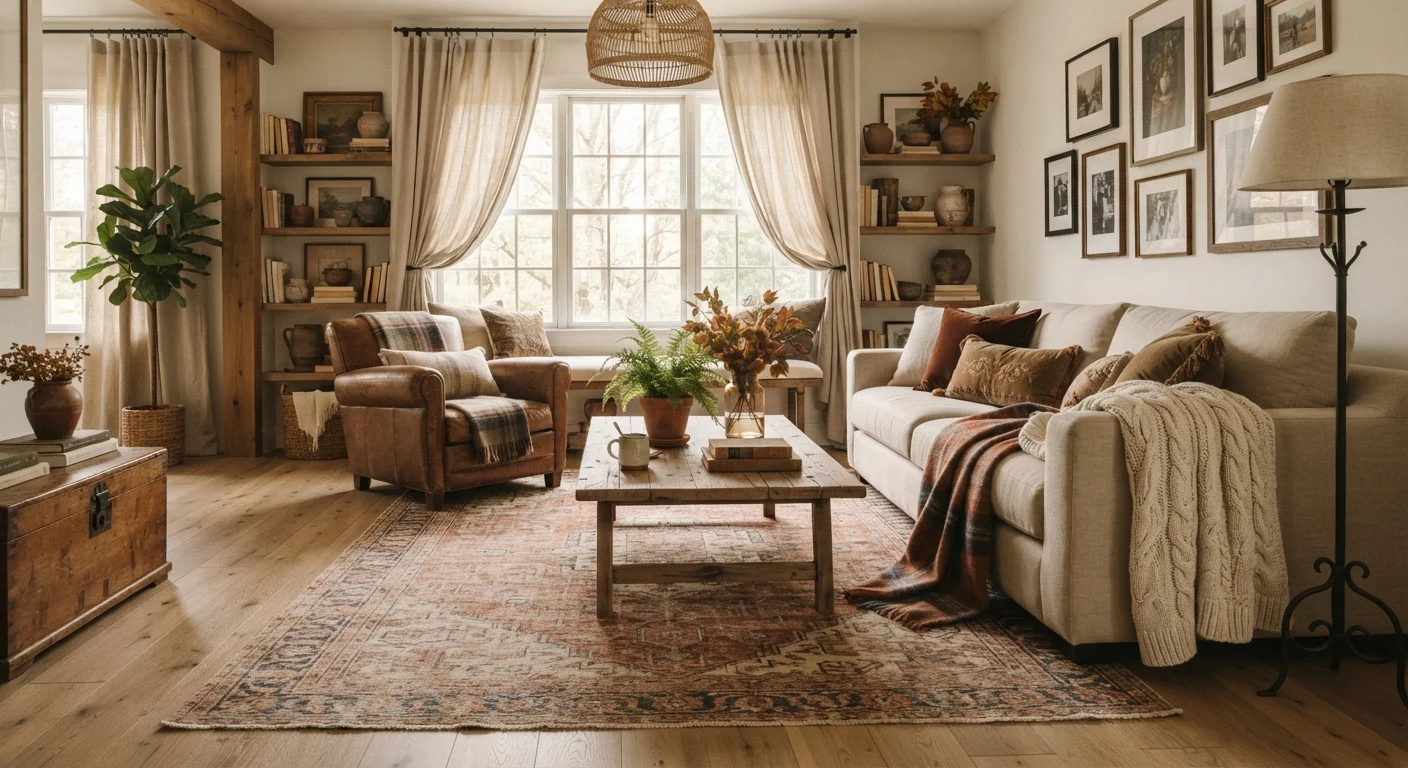
Photo: signaturehomeideas.com editorial
Key Takeaways
- A rug sized correctly under furniture anchors a seating zone and makes a room feel intentional.
- Curtains hung high and wide above windows add the illusion of taller, wider walls.
- Throws and cushion covers are low-cost ways to test a new color direction before committing.
- Repeating one textile color in at least two spots in a room ties the palette together.
- Pattern scale matters: mixing a large-scale pattern with a small one prevents visual clutter.
Why textiles are the most flexible design tool in a room
Paint and furniture get most of the attention in decorating conversations, but textiles do some of the heaviest visual work. A rug defines where a seating group begins and ends. Curtains frame the architecture of a window and set the ceiling height in a viewer's eye. A throw draped over a chair introduces texture that paint simply cannot deliver. Because textiles are relatively easy to swap out, they let homeowners test ideas without the permanence of a structural change.
Before purchasing any textile, work through your room's proportions, traffic patterns, and existing color story. The room styling checklist covers those measurements in detail and can save you from a costly return.
Best practices for rugs, throws, and curtains
The practices below apply across room types and budget levels. Each addresses a specific design problem that textiles solve when used with intention.
Size your rug so that at least the front legs of every major seating piece rest on it
Hang curtain rods as close to the ceiling as the wall allows, and extend them 6 to 12 inches beyond each side of the window frame
Use throws and cushion covers to introduce a new color before committing to larger purchases
Repeat each textile color or pattern in at least two places within the same room
Mix pattern scales deliberately: pair a large-scale pattern with a small one rather than combining two patterns of similar scale
Choose curtain fabric weight to match the function of the room
Quick actions you can take today
Textiles also interact directly with your overall color palette. If you want to understand how hue choices affect perception before you shop, the guide on color theory for every room walks through warm, cool, and neutral tones in practical terms.
For readers working in smaller spaces, many of the same textile principles apply, but scale becomes even more important. Common oversizing and pattern mistakes are covered in the article on small room decor habits worth reviewing before you buy a rug.
The content provided on our blog site traverses numerous categories, offering readers valuable and practical information. Readers can use the editorial team’s research and data to gain more insights into their topics of interest. However, they are requested not to treat the articles as conclusive. The website team cannot be held responsible for differences in data or inaccuracies found across other platforms. Please also note that the site might also miss out on various schemes and offers available that the readers may find more beneficial than the ones we cover.