

The Real Trade-Offs of Installing a Backyard Water Feature

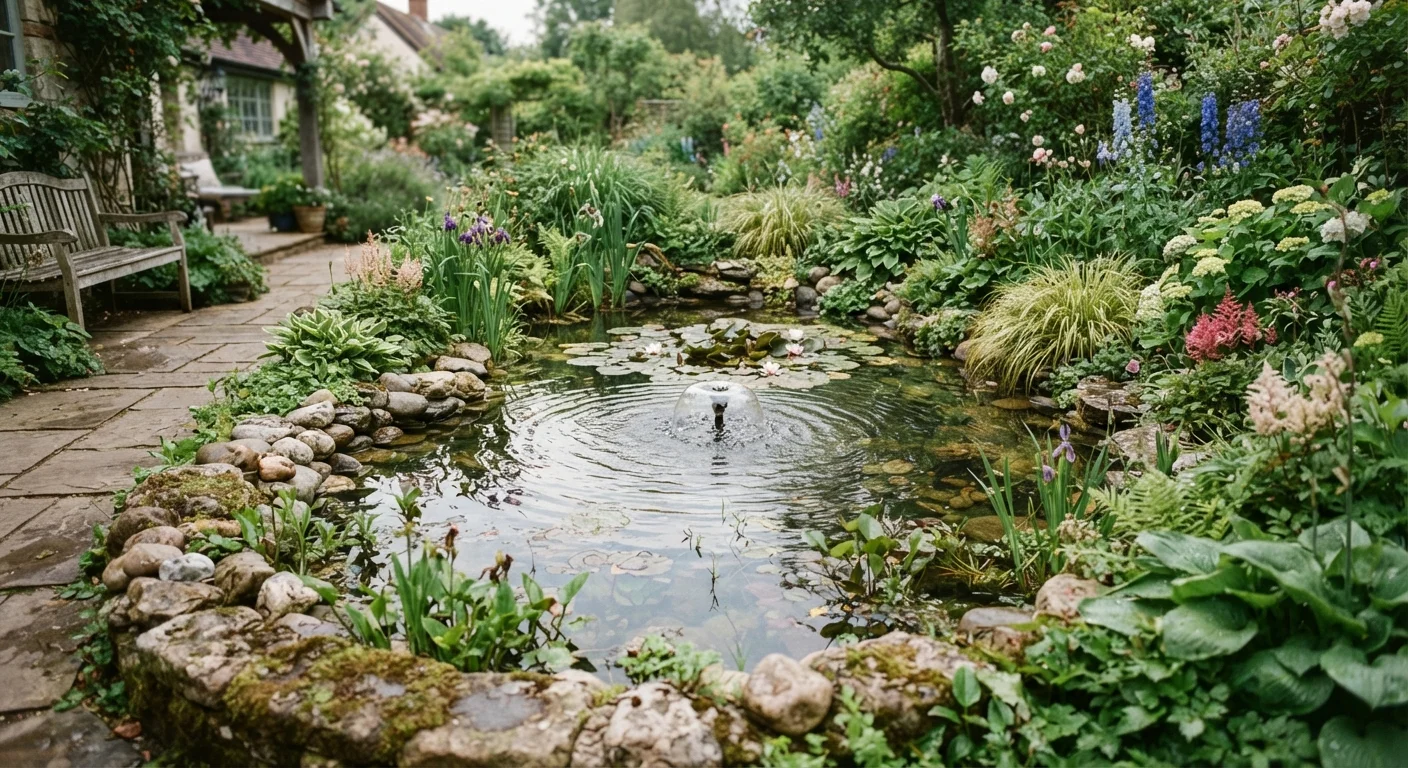
Photo: signaturehomeideas.com editorial
Key Takeaways
- Water features can reduce ambient noise and attract beneficial wildlife, but they require consistent upkeep year-round.
- Even small fountains need a nearby power source and routine cleaning to prevent algae and mosquito breeding.
- Installation costs vary widely depending on size, type, and whether excavation or electrical work is involved.
- Ponds with fish or aquatic plants carry higher maintenance demands than recirculating fountains or birdbaths.
- Local permits may be required for in-ground ponds, especially those above a certain depth.
Adds ambient sound that masks street and neighbor noise
Moving water produces a consistent, low-frequency sound that many people find calming. In yards that back up to roads or busy neighborhoods, even a modest recirculating fountain can make the space feel more private.
Attracts birds, pollinators, and beneficial insects
A reliable water source draws a wider range of birds and beneficial insects than feeders alone. Birdbaths and shallow pond margins are especially effective during dry summer months.
Improves the visual depth of a garden bed or patio area
Water reflects surrounding plantings and sky, which makes even a compact space feel more layered. A well-placed feature can serve as a focal point without requiring large structures.
Can support aquatic plants that thrive in no other garden spot
Water lilies, pickerelweed, and lotus require standing water that a standard garden bed cannot provide. A pond expands planting options significantly for homeowners who want a broader range of species.
Recirculating systems use relatively modest electricity
Small submersible pumps for fountains and ponds typically draw between 50 and 150 watts, less than many common appliances. Running costs depend on local utility rates and how many hours per day the pump operates.
Standing water breeds mosquitoes if not properly managed
Any water that sits still for more than a few days can become a mosquito habitat. A working pump that keeps water moving, combined with regular cleaning, is the standard prevention; stagnant corners in pond shelves are easy to overlook.
Algae growth requires consistent cleaning effort
Nutrient runoff from nearby soil, sunlight, and warm temperatures all accelerate algae buildup. Without regular skimming, water changes, or biological filtration, most water features will turn green within a few weeks in summer.
Installation can be expensive and disruptive
In-ground ponds require excavation, liner installation, and often an electrical run for the pump. Depending on size and complexity, professional installation costs can reach several thousand dollars, and the yard will be disrupted during the process.
Seasonal winterization adds work in cold climates
In USDA zones 6 and colder, pumps typically need to be removed, pipes drained, and fish (if present) moved indoors or provided with a de-icer to survive. Skipping these steps can damage equipment or kill aquatic life.
Open water is a safety concern around children
Even shallow ponds present a drowning risk for toddlers and young children. Some municipalities require fencing or other barriers around in-ground water features above a certain depth; check local codes before installation.
Nearby trees drop debris that clogs filters and pumps
Leaves, seedpods, and pollen land directly in the water and decompose quickly, raising nutrient levels and fouling pump intakes. Siting a feature away from deciduous trees reduces but rarely eliminates this problem.
What counts as a backyard water feature
The category covers a wide range: a simple glazed pot fountain on a patio, a preformed fiberglass pond shell, a custom concrete pool with a waterfall, and a basic ceramic birdbath all qualify. The maintenance demands, installation complexity, and costs scale with size and complexity, so the trade-offs discussed below apply in different degrees depending on which type you are considering.
For homeowners working with limited yard space, a recirculating fountain or raised container pond is usually the lower-commitment starting point. If you are weighing a water feature against other outdoor additions, outdoor living ideas for modest-sized backyards covers how features like this sit alongside seating areas, container gardens, and other improvements.
The case for adding one
The most immediate effect of a water feature is acoustic. Moving water produces a consistent background sound that competes with traffic, lawn equipment from neighboring properties, and other ambient noise. This is not a complete sound barrier, but it does shift the character of the space noticeably.
Adds ambient sound that masks street and neighbor noise
Moving water produces a consistent, low-frequency sound that many people find calming. In yards that back up to roads or busy neighborhoods, even a modest recirculating fountain can make the space feel more private.
Attracts birds, pollinators, and beneficial insects
A reliable water source draws a wider range of birds and beneficial insects than feeders alone. Birdbaths and shallow pond margins are especially effective during dry summer months.
Improves the visual depth of a garden bed or patio area
Water reflects surrounding plantings and sky, which makes even a compact space feel more layered. A well-placed feature can serve as a focal point without requiring large structures.
Can support aquatic plants that thrive in no other garden spot
Water lilies, pickerelweed, and lotus require standing water that a standard garden bed cannot provide. A pond expands planting options significantly for homeowners who want a broader range of species.
Recirculating systems use relatively modest electricity
Small submersible pumps for fountains and ponds typically draw between 50 and 150 watts, less than many common appliances. Running costs depend on local utility rates and how many hours per day the pump operates.
Beyond sound, water draws wildlife that benefits the broader garden. Birds bathing and drinking in a shallow basin eat insects and weed seeds. Pollinators visit water sources during hot spells when nectar is less available. A pond with a planted margin provides habitat that a paved patio or lawn cannot.
The ongoing demands
The practical challenges start the moment a feature is installed. Still water and organic debris are a reliable combination for algae and mosquito problems. A pump that keeps water circulating addresses both, but pumps require electricity, occasional cleaning, and eventual replacement.
Standing water breeds mosquitoes if not properly managed
Any water that sits still for more than a few days can become a mosquito habitat. A working pump that keeps water moving, combined with regular cleaning, is the standard prevention; stagnant corners in pond shelves are easy to overlook.
Algae growth requires consistent cleaning effort
Nutrient runoff from nearby soil, sunlight, and warm temperatures all accelerate algae buildup. Without regular skimming, water changes, or biological filtration, most water features will turn green within a few weeks in summer.
Installation can be expensive and disruptive
In-ground ponds require excavation, liner installation, and often an electrical run for the pump. Depending on size and complexity, professional installation costs can reach several thousand dollars, and the yard will be disrupted during the process.
Seasonal winterization adds work in cold climates
In USDA zones 6 and colder, pumps typically need to be removed, pipes drained, and fish (if present) moved indoors or provided with a de-icer to survive. Skipping these steps can damage equipment or kill aquatic life.
Open water is a safety concern around children
Even shallow ponds present a drowning risk for toddlers and young children. Some municipalities require fencing or other barriers around in-ground water features above a certain depth; check local codes before installation.
Nearby trees drop debris that clogs filters and pumps
Leaves, seedpods, and pollen land directly in the water and decompose quickly, raising nutrient levels and fouling pump intakes. Siting a feature away from deciduous trees reduces but rarely eliminates this problem.
Cold-climate maintenance is a separate concern. If the pump is not rated for submersion through winter, it must come out before the first hard freeze. Fish, if present, need either a sufficiently deep pond that stays above freezing at the bottom or indoor housing. These steps take real time and planning each fall.
Permits and local codes
Tree placement matters more than most homeowners realize when siting a feature. A pond under a large oak will spend much of autumn buried in leaf debris, which decomposes and feeds algae the following spring. Choosing a spot with good sun but away from heavy canopy saves significant cleaning time over the life of the feature.
Deciding whether the trade-off works for your yard
The practical test is straightforward: are you willing to spend 15 to 30 minutes per week during the growing season cleaning, checking water levels, and clearing debris? For a small fountain, that is a fair estimate. For an in-ground pond with fish and aquatic plants, the commitment is higher, particularly in spring and fall.
Access to a power source is another constraint that surprises some homeowners. Running a pump from an outdoor outlet on the house often requires a conduit run across the yard. That work involves electrical wiring and, in most jurisdictions, a licensed electrician. Factor that into cost estimates from the start.
If the maintenance commitment seems manageable, a water feature is a genuine change to how a yard looks and functions, not just a decorative addition. If the upkeep looks like it will go undone, a smaller or above-ground option with a simpler pump is a better match than an ambitious in-ground installation that sits neglected.
50-150W
Typical small pond pump power draw
Most submersible pumps designed for residential garden ponds and fountains fall within this range, according to pump specification data from manufacturer product lines.
72 hours
Time for mosquito larvae to hatch in still water
The U.S. Centers for Disease Control and Prevention notes that mosquitoes can complete early larval stages in stagnant water within roughly 48 to 72 hours in warm conditions.
The content provided on our blog site traverses numerous categories, offering readers valuable and practical information. Readers can use the editorial team’s research and data to gain more insights into their topics of interest. However, they are requested not to treat the articles as conclusive. The website team cannot be held responsible for differences in data or inaccuracies found across other platforms. Please also note that the site might also miss out on various schemes and offers available that the readers may find more beneficial than the ones we cover.