

Outdoor Living Spaces Worth Considering for a Modest-Sized Backyard

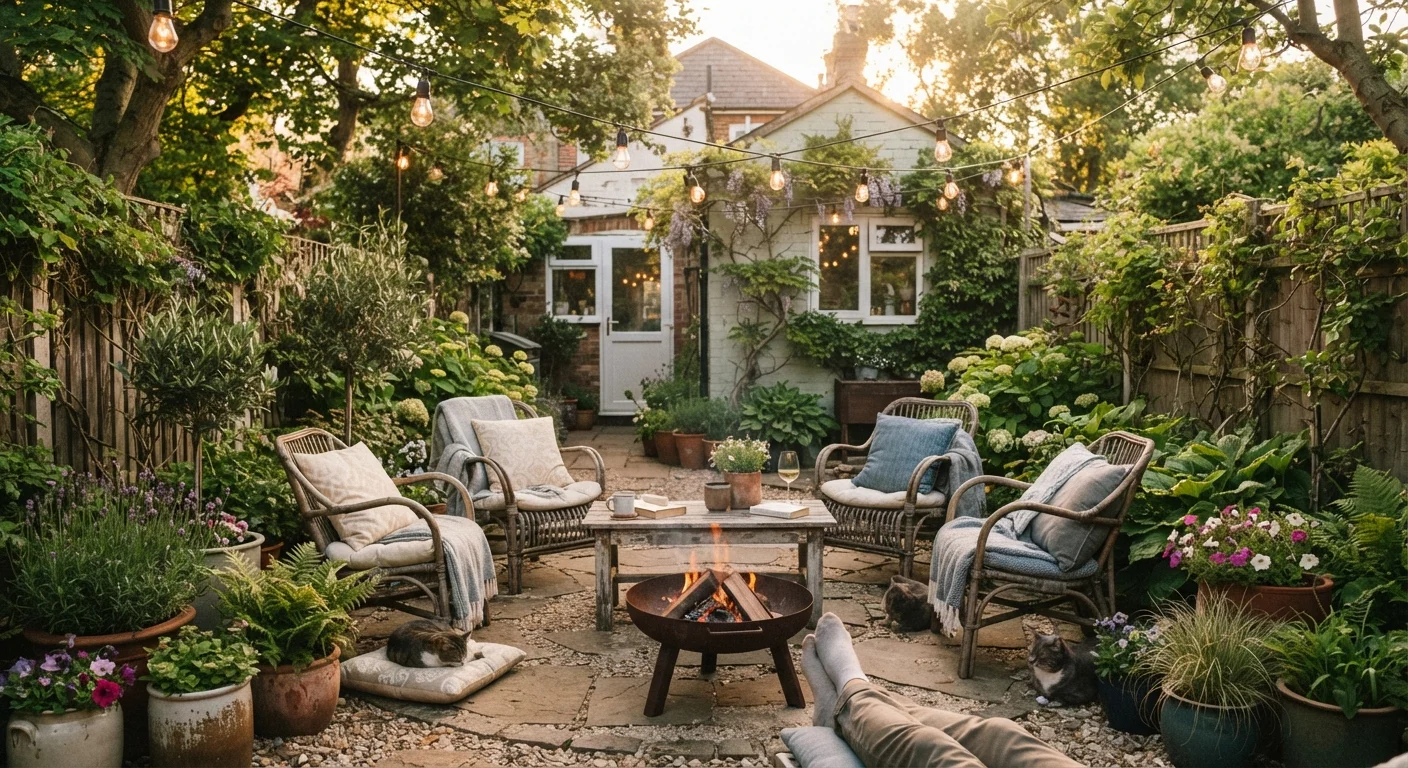
Photo: signaturehomeideas.com editorial
Key Takeaways
- Defining distinct zones makes a small backyard feel larger and more functional.
- Overhead shade structures extend how many hours per day you can use the space.
- Container gardens work on any surface and can be moved as needs change.
- A simple fire pit or low-voltage lighting can make the space usable after dark.
- Vertical elements like trellises and wall planters free up floor area.
- Planning zones, sight lines, and seasonal interest before building saves time and money.
What a modest backyard can actually hold
A backyard does not need to be large to function well as an outdoor room. Many homeowners with average-sized lots assume they have to choose between a lawn, a garden, and a seating area. With some planning, all three can coexist in a space smaller than a two-car garage footprint.
The ideas below are scaled for typical suburban backyards. Each one can be built in stages, and none requires tearing out everything you already have. Before committing to any layout, it helps to work through your space systematically. Our landscape planning guide covers how to map zones, consider sight lines, and choose plants that look good across seasons.
A defined seating zone with overhead shade
The single change that makes a small backyard feel intentional is giving the seating area a clear boundary and a roof of some kind. A 10-by-10-foot pea gravel pad, a set of concrete pavers, or a small deck section separates the sitting area from the rest of the yard visually and underfoot.
Overhead shade matters more than most people expect. A pergola, a sail shade, or even a large patio umbrella extends the usable hours during summer afternoons and gives the space a sense of enclosure without walls. A basic freestanding pergola built from pressure-treated lumber is within reach for a homeowner comfortable with a circular saw and a post-hole digger, though any structure attached to the house may require a permit depending on your municipality.
An overhead shade structure extends usable hours and gives the space a sense of enclosure without walls.
Container gardens on any hard surface
Containers let you grow vegetables, herbs, and flowers on a patio, a concrete slab, or even a gravel area without digging a single bed. They also move, which means you can reorganize the layout as your needs change or bring frost-sensitive plants indoors in fall.
Grouping containers of different heights creates depth in a small space. A large pot of ornamental grass or a dwarf shrub anchors a corner, while smaller pots of herbs or annuals fill in around it. Drainage is the detail most beginners overlook: a pot without adequate drainage holes will drown roots within a few weeks of rain. Our container gardening guide covers pot sizing, soil mix, and watering schedules in detail.
Containers move, which means you can reorganize the layout as your needs change season to season.
Vertical growing structures
When floor space is limited, walls and fences become growing surfaces. A simple cedar trellis attached to a fence supports climbing roses, jasmine, or annual vines like morning glory. A wall-mounted planter system can hold herbs directly outside a back door, keeping frequently used plants within arm's reach without taking up patio space.
Vertical structures also improve privacy without the visual weight of a solid fence extension. A trellis covered in a climbing plant filters sightlines to neighboring yards while still letting air move through. Most trellis work involves basic carpentry at fence height, which does not typically require permits, though you should confirm local rules before attaching anything to a shared fence.
A trellis covered in a climbing plant filters sightlines to neighboring yards while still letting air through.
A small fire pit area
A portable or in-ground fire pit turns an ordinary backyard into a place people want to be after dark. In a modest space, a portable steel fire bowl placed on a gravel or paver surface works well because it can be moved when not in use. Gravel or stone underneath is important: wood decking or dry grass near an open flame is a fire hazard.
Check local fire codes before purchasing or building anything. Many municipalities restrict open burning within a certain distance of structures or have seasonal burn bans. Some jurisdictions require permits for permanent in-ground fire pits. A gas-fueled fire table is an alternative where wood burning is restricted, though installation of gas lines must be done by a licensed professional.
Check local fire codes before building or placing any fire pit: restrictions on distance and fuel type vary widely.
A small-scale water feature
A compact fountain or a container water garden can add sound and movement to a backyard without a major construction project. A half-barrel fitted with a small submersible pump and a few aquatic plants is one approach that fits on a patio and requires no plumbing work beyond a standard outdoor electrical outlet.
Water features do come with ongoing maintenance: algae growth, pump cleaning, and winterization in cold climates. Before committing, it is worth reading through the trade-offs of backyard water features to understand what the upkeep actually looks like across seasons.
A half-barrel fountain fits on a patio and adds sound and movement with minimal construction.
A designated play or multipurpose lawn strip
Not every square foot needs to be built out. A narrow strip of turf or groundcover between the patio and a planting bed gives children a soft surface to move on and gives adults a visual break between hardscape areas. Even a 6-foot-wide strip of lawn maintained with a small reel mower serves this purpose without requiring a dedicated lawn tractor or irrigation system.
If grass is difficult to maintain in a shaded yard, low-growing groundcovers such as clover or creeping thyme tolerate foot traffic and require less mowing. Creeping thyme releases a mild fragrance when walked on and supports pollinators, which benefits any nearby vegetable or herb containers.
A narrow lawn strip between patio and planting beds gives the yard visual breathing room without consuming the whole space.
Getting the most from what you build
The ideas above share a common thread: they prioritize how you use the space over how much square footage you cover. A 10-by-12-foot patio with a pergola overhead and a container herb bed alongside it can do more work than a bare expanse of lawn twice its size.
Lighting ties many of these elements together after sunset. Low-voltage path lights, string lights on a pergola, and a small spotlight aimed at a planter all change how the yard feels at night without complex wiring. See our outdoor lighting ideas for approaches suited to these kinds of spaces.
Start with one zone, not the whole yard
This article is for general informational purposes only. Always verify local building codes and permit requirements before starting any outdoor construction project, including decks, pergolas, and hardscaping. Consult a licensed contractor for structural or electrical work.
The content provided on our blog site traverses numerous categories, offering readers valuable and practical information. Readers can use the editorial team’s research and data to gain more insights into their topics of interest. However, they are requested not to treat the articles as conclusive. The website team cannot be held responsible for differences in data or inaccuracies found across other platforms. Please also note that the site might also miss out on various schemes and offers available that the readers may find more beneficial than the ones we cover.