

Hardscaping and Softscaping: Understanding the Two Pillars of Landscape Design

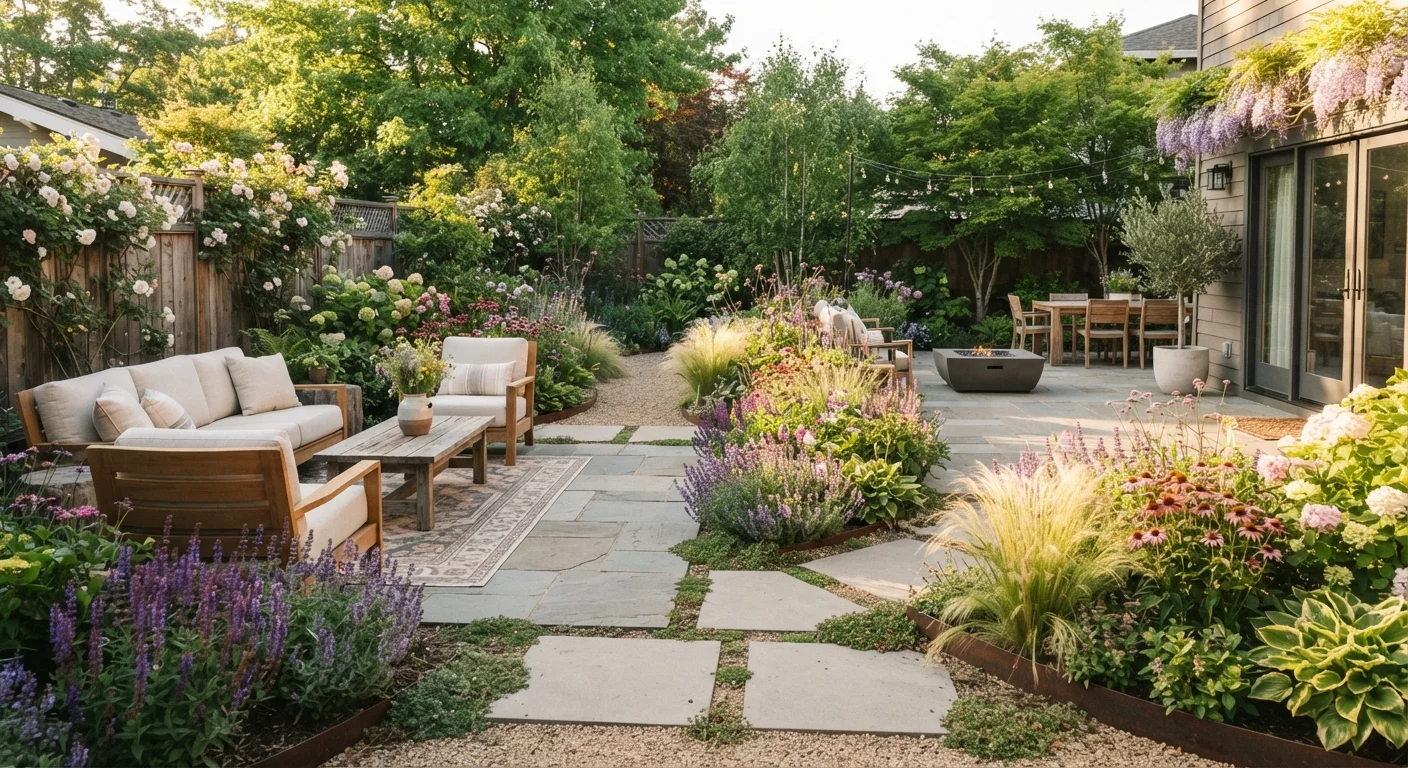
Photo: signaturehomeideas.com editorial
Key Takeaways
- Hardscaping includes all non-living built structures: patios, paths, walls, and edging.
- Softscaping covers every living element: plants, turf, trees, and amended soil.
- Most functional yards need both working together, not one dominating the other.
- Hardscaping is generally planned first because it shapes the space that plants then fill.
- Drainage is the hidden variable that connects both categories and can make or break a design.
What hardscaping actually covers
Hardscaping is the built skeleton of any outdoor space. It includes every non-living, constructed element: poured concrete patios, flagstone paths, brick edging, wooden decks, pergolas, retaining walls, gravel driveways, and decorative boulders. The defining trait is permanence or near-permanence. These elements reshape the land rather than grow from it.
Because hardscaping changes grades, redirects water, and bears foot traffic or vehicle load, it is usually the first category to plan and install. Mistakes here are expensive to undo. A retaining wall built in the wrong location can send water toward a foundation; a patio poured without a slope can pool rain against a house wall. The structural decisions in hardscaping set the conditions every living element must work within.
Some hardscaping projects fall under local building codes. Retaining walls taller than a certain height (often two to four feet, depending on jurisdiction) typically require a permit, and some may require an engineer's sign-off. Always verify requirements with your local building department before breaking ground on anything structural.
What softscaping actually covers
Softscaping is every living element in the landscape. Lawn turf, ornamental grasses, ground covers, annual flower beds, perennial borders, shrubs, and trees all fall into this category. So does the soil itself, including amendments like compost or mulch that support plant health.
Living material changes over time in ways hardscaping does not. A shrub planted near a path will eventually spread into it. Tree roots will work under pavers if given enough years. This means softscaping decisions require thinking ahead, not just about how a plant looks at planting time but at maturity. A tree with a 40-foot canopy spread belongs in a very different location than one that stays at 10 feet.
Test your soil before planting anything
Soil preparation is the part of softscaping homeowners most often skip. Compacted or nutrient-poor soil limits what will grow regardless of how much water or fertilizer you add later. Testing soil before planting and amending it accordingly saves significant effort over time.
How the two categories interact
Hardscaping and softscaping are not independent systems. They affect each other constantly, and drainage is the most direct point of connection. Hard surfaces shed water. Planted areas absorb it. A yard heavy on impervious surface concentrates runoff and can overwhelm planted areas or direct water where you do not want it.
Permeable hardscaping options (gravel, decomposed granite, permeable concrete, spaced pavers with planted joints) soften this relationship. They let water infiltrate rather than run off, which supports nearby plant roots and reduces erosion. Where fully impermeable surfaces are necessary, grading toward planted swales or dry creek beds can redirect water into the landscape rather than off the property.
Visually, the two categories also need to speak to each other. Hard lines in stone or concrete read as intentional when softened by plant material at their edges. Conversely, a dense planting scheme benefits from the visual clarity of a defined path or border. The full landscape planning process works through exactly this kind of spatial relationship before any material gets ordered.
40%
Of US household water use goes to landscaping
According to the U.S. Environmental Protection Agency, landscape irrigation accounts for roughly 40 percent of residential water use in summer months, making plant selection and hardscape ratio meaningful water management decisions.
2-4 ft
Common permit threshold for retaining walls
Many jurisdictions require building permits for retaining walls above two to four feet in height. Exact thresholds vary by municipality, so local verification is always required.
Planning the balance for your yard
A reasonable starting point for most residential yards is to think about use first. Where do people walk? Where do they sit? Where do children or pets need open ground? Those functional zones often point naturally toward hardscaping: a patio near the back door, a path between the driveway and the entrance, a defined edge between lawn and planting beds.
Once the structural zones are mapped, the remaining areas fill with softscaping suited to light exposure, soil conditions, and maintenance expectations. A low-water front yard in a dry climate calls for different plant choices than a shaded backyard in a humid region. Neither is better in the abstract; both are responses to real site conditions.
Budget is also a practical factor. Hardscaping materials and installation tend to cost more upfront than plants, but they require less ongoing maintenance. Softscaping generally costs less to install but needs regular watering, pruning, fertilizing, and seasonal replanting if annuals are involved. Understanding that trade-off helps in deciding where to invest more heavily when resources are limited.
This article is for informational purposes only. Building codes, permit requirements, and recommended practices vary by location. Consult your local building or planning department and, for structural or drainage work, a licensed professional before starting any significant landscape project.
Frequently Asked Questions
The content provided on our blog site traverses numerous categories, offering readers valuable and practical information. Readers can use the editorial team’s research and data to gain more insights into their topics of interest. However, they are requested not to treat the articles as conclusive. The website team cannot be held responsible for differences in data or inaccuracies found across other platforms. Please also note that the site might also miss out on various schemes and offers available that the readers may find more beneficial than the ones we cover.