

Soil Preparation: The Foundation Every Garden Actually Needs

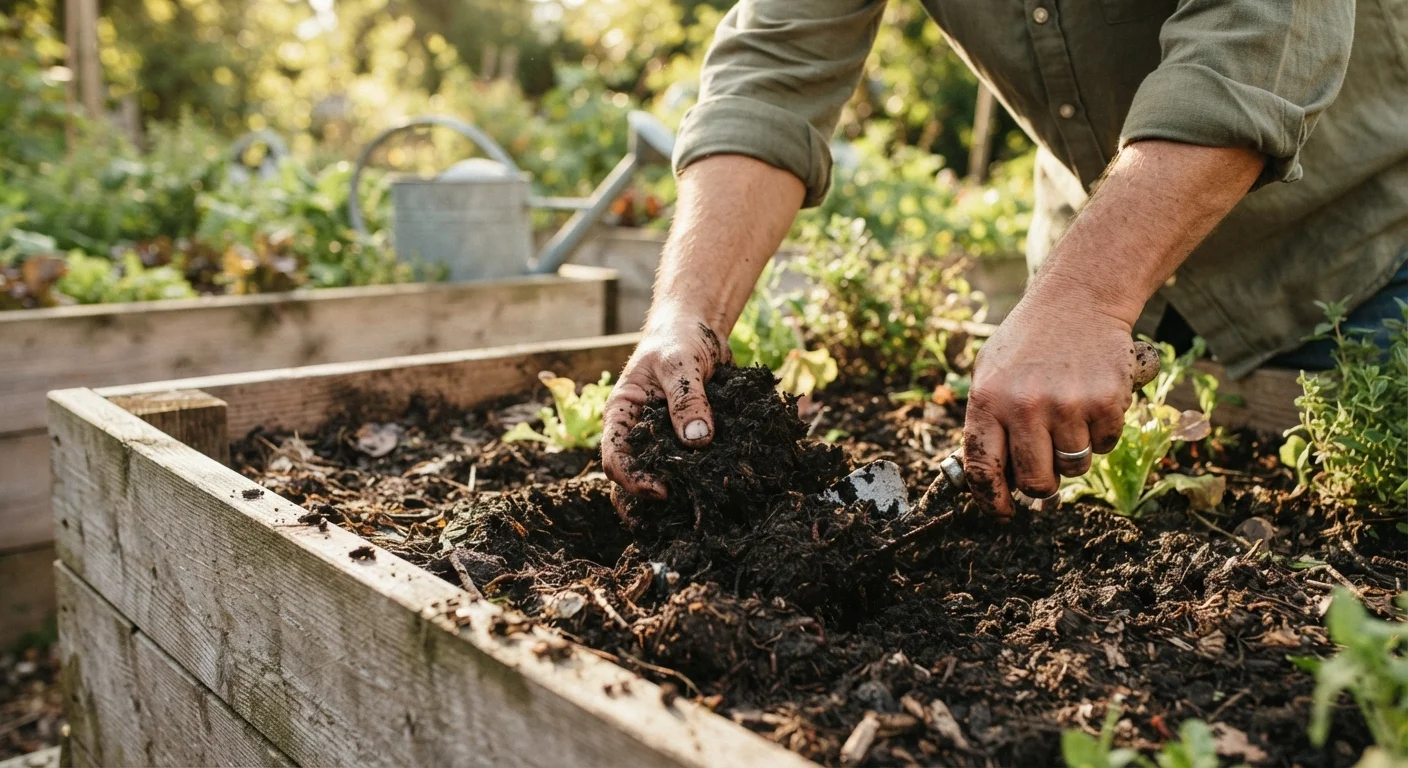
Photo: signaturehomeideas.com editorial
Key Takeaways
- Soil pH directly controls which nutrients plants can absorb, regardless of how much fertilizer you add.
- A simple home soil test tells you what your yard actually needs before you spend money amending it.
- Compacted soil blocks roots and water equally; loosening it is the first physical fix.
- Organic matter improves both sandy and clay soils by building structure over time.
- Most vegetable gardens and flower beds do best in soil with a pH between 6.0 and 7.0.
Why soil matters more than plant selection
Most gardening failures trace back to soil, not plant choice. A tomato variety with glowing reviews will stall in compacted, nutrient-poor ground. A perennial rated for your hardiness zone will yellow and struggle if your pH is off by even a point. The soil sets the ceiling for everything growing in it.
The good news: soil is fixable. Unlike climate or light exposure, you have real control over what goes on beneath the surface. Understanding what your soil currently is gives you the information to improve it methodically, one season at a time.
Test before you amend
How to read your soil before you dig
Start with a soil test. Home test kits measure pH and basic nutrients (nitrogen, phosphorus, potassium) in about 15 minutes. For more detail, your state's cooperative extension service typically offers lab testing at low cost, with a written report and amendment recommendations specific to your region.
While you wait for results, do a few physical checks. Grab a handful of moist soil and squeeze it. If it forms a ribbon you can't break without pressing hard, you have heavy clay. If it crumbles immediately and feels gritty, you have sandy soil. Both need organic matter, but for different reasons: clay needs better drainage and aeration, while sandy soil needs better water and nutrient retention.
The jar test gives you a clearer breakdown. Fill a mason jar two-thirds with water, add a cup of your soil, shake it, and leave it overnight. Sand settles first, silt settles second, and clay remains suspended longest. The proportions you see give a rough sense of your soil texture.
Adjusting pH: the step most gardeners skip
Soil pH runs on a scale from 0 to 14, with 7.0 as neutral. Most garden plants do best between 6.0 and 7.0 because nutrients become available to roots at that range. Outside it, even a well-fertilized bed can leave plants starved.
If your pH reads below 6.0 (too acidic), ground limestone raises it. Apply it in fall so it has time to work before spring planting. If it reads above 7.5 (too alkaline), elemental sulfur lowers it, but the process is slow and requires multiple growing seasons to show a full effect.
Follow the rates on your soil test report rather than guessing. Over-liming is a real problem and harder to reverse than under-liming. A retest after one full season tells you how far the amendment moved the needle.
pH changes take time
Adding organic matter: the work that compounds over time
Compost is the most practical all-purpose soil amendment for home gardeners. Worked into the top 8 to 12 inches at a rate of 2 to 4 inches per season, it improves drainage in clay, improves moisture retention in sand, feeds soil microbes, and slowly releases nutrients as it breaks down. The benefits build year over year.
You can make compost at home from kitchen scraps and yard waste. The process for turning organic waste into usable compost is straightforward once you understand the balance of carbon-rich and nitrogen-rich materials. A working compost pile can produce finished material in as little as two to three months in warm weather.
Other organic amendments worth knowing: aged wood chips break down slowly and work best as mulch on top of beds rather than dug in. Well-rotted manure from herbivores (cows, horses, chickens) adds nutrients but should be fully composted before use to avoid burning plant roots or introducing pathogens.
Loosening compacted soil without damaging structure
Compaction prevents roots from growing downward and stops water from draining at a normal rate. It often affects suburban yards heavily, where construction equipment, foot traffic, or years of clay soil drying and cracking have compressed the top layers.
A garden fork loosens soil better than a rototiller for most home beds. A tiller pulverizes structure and can create a hard layer (called a plow pan) just below its working depth. Work the fork 10 to 12 inches deep in a grid pattern, rocking it gently to open the soil without fully inverting it.
After loosening, avoid walking in the bed. Designated paths or stepping stones keep foot traffic off productive soil and prevent compaction from resetting between seasons. For larger areas, raised beds with defined borders solve the compaction problem permanently by separating planting zones from walking zones.
Frequently Asked Questions
The content provided on our blog site traverses numerous categories, offering readers valuable and practical information. Readers can use the editorial team’s research and data to gain more insights into their topics of interest. However, they are requested not to treat the articles as conclusive. The website team cannot be held responsible for differences in data or inaccuracies found across other platforms. Please also note that the site might also miss out on various schemes and offers available that the readers may find more beneficial than the ones we cover.