

Kitchen Countertop Materials: A Practical Reference Guide

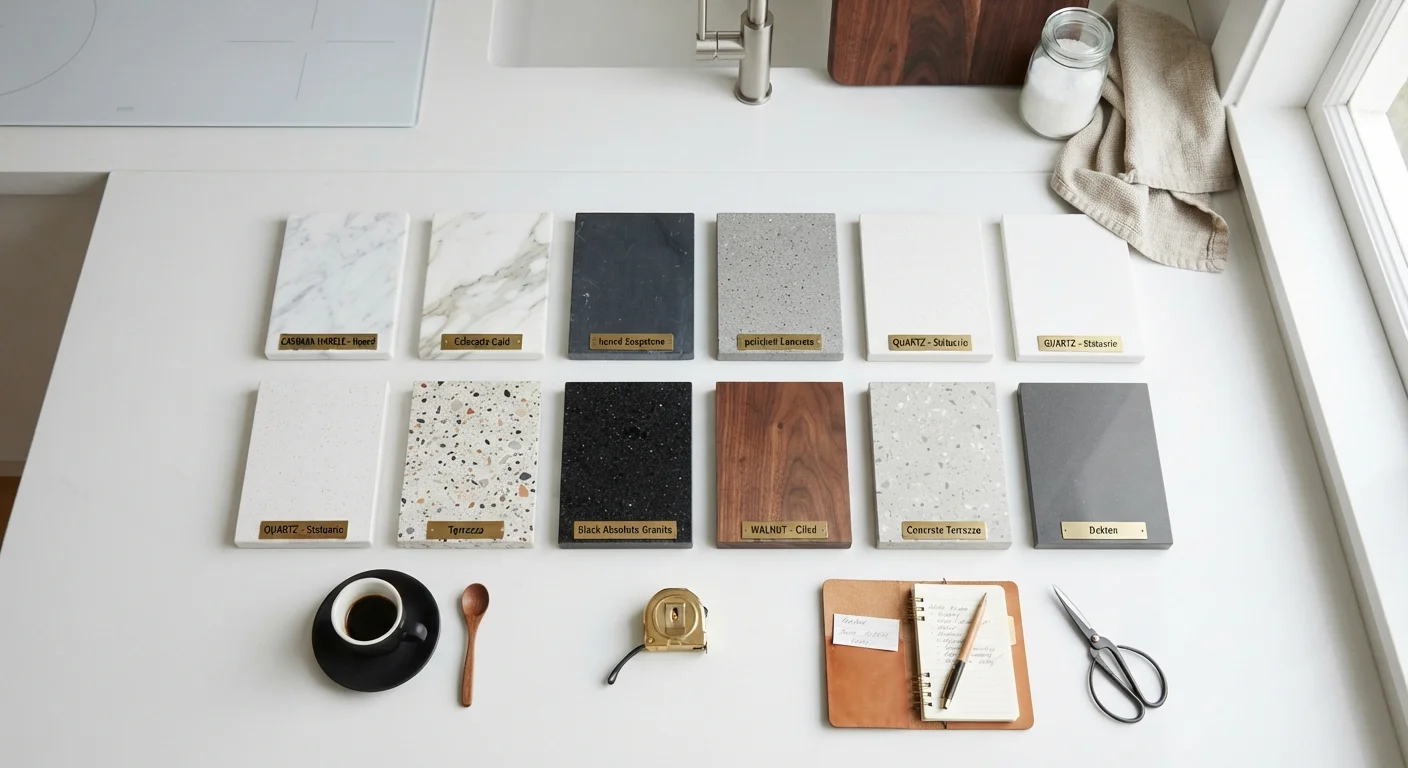
Photo: signaturehomeideas.com editorial
What this guide covers
Choosing a countertop material involves weighing durability, maintenance, cost range, and how the surface holds up to daily kitchen use. This guide covers five materials homeowners commonly consider: granite, quartz, laminate, butcher block, and concrete. Each entry notes the material's core properties, typical upkeep, and where it tends to work well or fall short.
| Granite porosity | Porous; requires annual sealing in most kitchens |
| Quartz sealing requirement | None; non-porous engineered surface |
| Laminate heat tolerance | Low; scorches under direct heat |
| Butcher block maintenance | Food-safe mineral oil applied periodically |
| Concrete installation | Custom cast; typically requires professional fabrication |
| Most DIY-friendly option | Laminate (pre-formed sections available at home centers) |
Granite
Granite is a natural stone cut from quarried slabs. Because it forms underground over millions of years, no two slabs are identical in pattern or color. The surface is hard and heat-resistant, but it is porous, so spills of oil, wine, or acidic liquids can penetrate if a sealer is not applied. Most installers recommend sealing granite once a year, though actual frequency depends on the stone's porosity and how heavily the kitchen is used.
Granite requires professional fabrication and installation because the slabs are heavy and must be cut precisely to fit. For a detailed comparison of granite against engineered stone, see our quartz vs. granite breakdown.
Quartz
Quartz countertops are engineered from ground quartz bound with resin and pigment. The manufacturing process makes the surface non-porous, so it does not require sealing. The resin binder can be damaged by prolonged exposure to direct heat, so trivets or hot pads are still advisable near the stove.
Because quartz is manufactured, colors and patterns are consistent across a slab, which makes matching sections or planning a layout more predictable than with natural stone.
Laminate
Laminate is a layered product: a printed or photographic layer bonded to a particleboard or MDF core, topped with a protective coating. It is one of the more accessible materials by cost and is available in a wide range of colors and patterns, including designs that mimic stone or wood.
Laminate resists stains well but is vulnerable to cuts (the surface scratches permanently), moisture at seams, and high heat. Once the surface layer is damaged, it cannot be refinished. Laminate countertops are a practical choice for rental properties, secondary work areas, or homeowners working within a tighter budget.
Butcher block
Butcher block is made from strips of hardwood (commonly maple, walnut, or oak) glued together under pressure. The surface can be used directly as a cutting surface, though doing so will mark it over time. Periodic oiling with food-safe mineral oil keeps the wood from drying and cracking.
Wood is susceptible to water damage. Standing moisture near the sink or along seams can cause swelling, warping, or mold growth if the surface is not well sealed and dried consistently. Butcher block is often used as a section of a larger countertop layout rather than covering the full perimeter, placing it away from the primary sink area.
Concrete
Concrete countertops are cast custom to fit a kitchen's exact dimensions, either poured in place or fabricated off-site. The material can be tinted, textured, or formed with integral drainboards and trivets. Because it is porous, concrete requires sealing and periodic resealing to resist staining.
Concrete can develop hairline cracks over time, particularly if a slab settles or if the mix was not properly reinforced. Weight is a consideration too: concrete is dense, and cabinetry must be able to support it. Installation is a specialized skill; most homeowners work with a contractor experienced in concrete casting rather than attempting it as a first DIY project.
Porous surface
A surface with tiny openings that allow liquids to penetrate. Porous countertops need sealing to prevent stains from absorbing into the material.
Sealer
A liquid coating applied to stone or concrete countertops to fill surface pores and slow liquid absorption. Most sealers require periodic reapplication.
Engineered stone
A manufactured composite material, such as quartz countertops, made by binding ground mineral particles with resin. Properties are more uniform than natural stone.
Food-safe mineral oil
A refined, odorless oil approved for surfaces that contact food. Used to condition and protect butcher block wood from drying and cracking.
This article provides general educational information about countertop materials. Costs, durability, and maintenance needs vary by product, region, and installation quality. Consult a licensed installer or kitchen designer for guidance specific to your project.
The content provided on our blog site traverses numerous categories, offering readers valuable and practical information. Readers can use the editorial team’s research and data to gain more insights into their topics of interest. However, they are requested not to treat the articles as conclusive. The website team cannot be held responsible for differences in data or inaccuracies found across other platforms. Please also note that the site might also miss out on various schemes and offers available that the readers may find more beneficial than the ones we cover.