

Lumens, Watts, and Color Temperature: What the Numbers on a Bulb Actually Mean

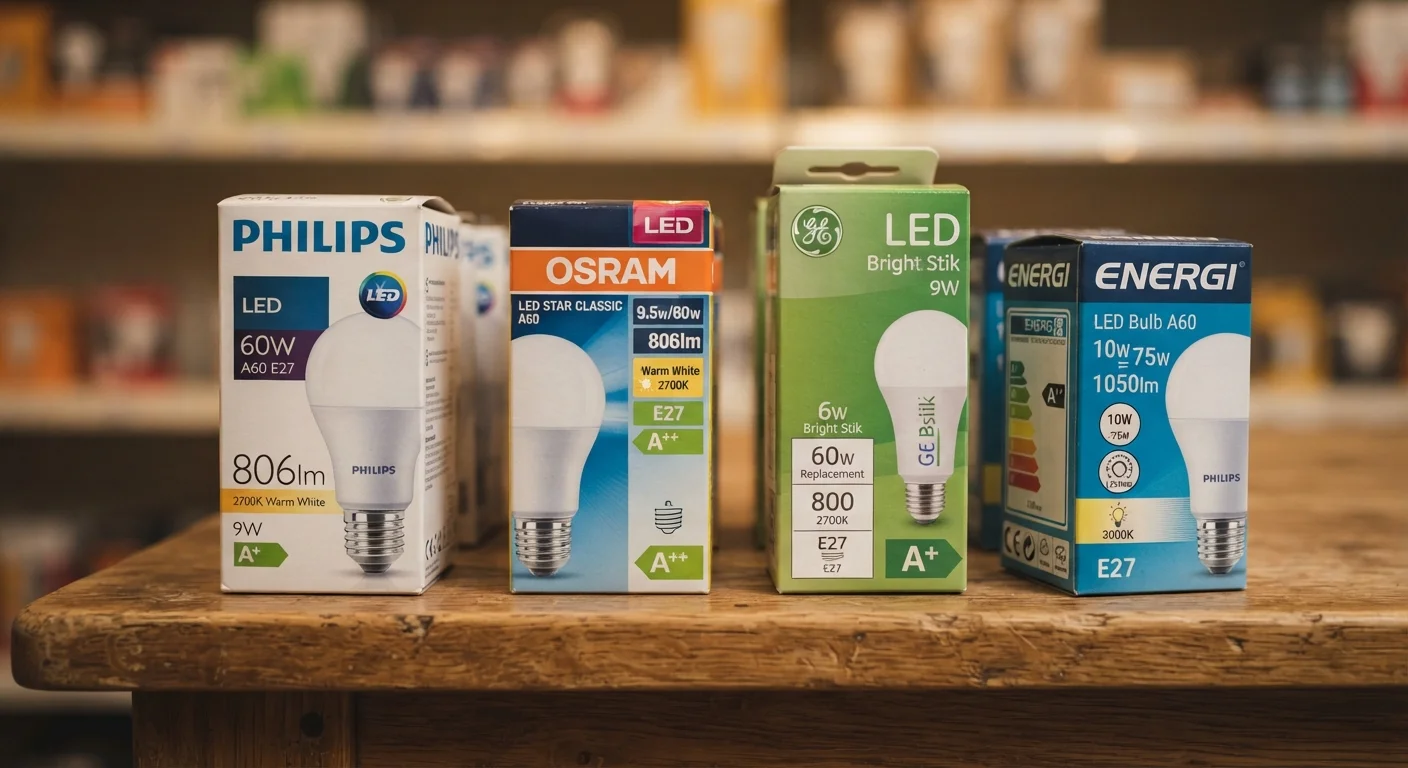
Photo: signaturehomeideas.com editorial
Key Takeaways
- Lumens, not watts, tell you how bright a bulb will be.
- Watts measure energy draw, which affects your electricity bill, not brightness.
- Kelvin ratings below 3000K produce warm, amber-toned light; above 4000K produces cooler, crisper light.
- For most living spaces, 2700K to 3000K is the standard comfortable range.
- An LED bulb can deliver the same lumens as an incandescent at a fraction of the wattage.
Why the old watt-to-brightness habit no longer works
For decades, shoppers picked bulbs by wattage. A 60-watt bulb meant a certain brightness, a 100-watt bulb meant more. That shortcut worked because every bulb on the shelf used the same incandescent technology, so wattage and brightness moved together in a predictable ratio.
LED and CFL bulbs broke that relationship entirely. An LED can produce the same light output as a 60-watt incandescent while consuming only 8 to 10 watts. Wattage still appears on packaging because it tells you about energy use, but it no longer tells you anything reliable about brightness. Reaching for the higher wattage bulb when you want more light is the kind of habit that leads to disappointment at the switch. Several common lighting myths persist precisely because shoppers have not made this mental shift yet.
Lumens: the actual measure of brightness
A lumen is a unit of luminous flux, the total amount of visible light a source emits in all directions. The higher the lumen count, the brighter the bulb.
Here is a rough reference frame based on common incandescent equivalents:
- 450 lumens is roughly equivalent to a 40-watt incandescent
- 800 lumens matches a 60-watt incandescent
- 1,100 lumens is close to a 75-watt incandescent
- 1,600 lumens replaces a 100-watt incandescent
When planning lighting for a room, add up the total lumen output of all fixtures rather than thinking bulb by bulb. A single overhead fixture with one 800-lumen bulb will feel dim in a kitchen; four recessed fixtures each running 650 lumens will feel quite different.
Match lumens to the fixture's purpose
Color temperature: what Kelvin actually describes
Color temperature is measured in Kelvin (K) and describes the color appearance of the light itself, not the room's temperature or how physically warm the bulb gets. The scale runs roughly from 1,000K (deep amber candlelight) to 6,500K and above (bright daylight blue).
For practical home use, three ranges cover most decisions:
- 2700K to 3000K: warm white, the familiar glow of traditional incandescent bulbs, well suited to living rooms, bedrooms, and dining areas
- 3500K to 4100K: neutral to cool white, a crisper light often used in kitchens, bathrooms, and home offices
- 5000K to 6500K: daylight range, a blue-toned light common in garages, workshops, and task-heavy spaces
The choice between these ranges is partly functional and partly personal preference. Warmer temperatures tend to make spaces feel relaxed; cooler temperatures support detail work and visual alertness. Neither is universally better.
One more number worth checking: CRI
The Color Rendering Index (CRI) does not appear on every package, but it is worth understanding. CRI is a scale from 0 to 100 that measures how accurately a light source renders colors compared to natural daylight. A CRI of 90 or above means colors in the room, including skin tones, fabrics, and food, will look close to how they appear outdoors. A CRI below 80 can make colors appear muted or slightly off.
For general living spaces, a CRI of 80 or higher is a reasonable target. Art studios, dressing rooms, and kitchens where food preparation happens benefit from 90 or above. Different bulb technologies vary in their typical CRI ranges, which is one reason some homeowners notice a difference in how a room looks after switching bulb types even when lumens and Kelvin stay the same.
Reading these three numbers together, lumens for brightness, Kelvin for color appearance, and CRI for color accuracy, gives you a complete picture of what a bulb will actually do in your home.
Frequently Asked Questions
The content provided on our blog site traverses numerous categories, offering readers valuable and practical information. Readers can use the editorial team’s research and data to gain more insights into their topics of interest. However, they are requested not to treat the articles as conclusive. The website team cannot be held responsible for differences in data or inaccuracies found across other platforms. Please also note that the site might also miss out on various schemes and offers available that the readers may find more beneficial than the ones we cover.