

LED vs. Incandescent vs. CFL: A Straightforward Breakdown for Everyday Use

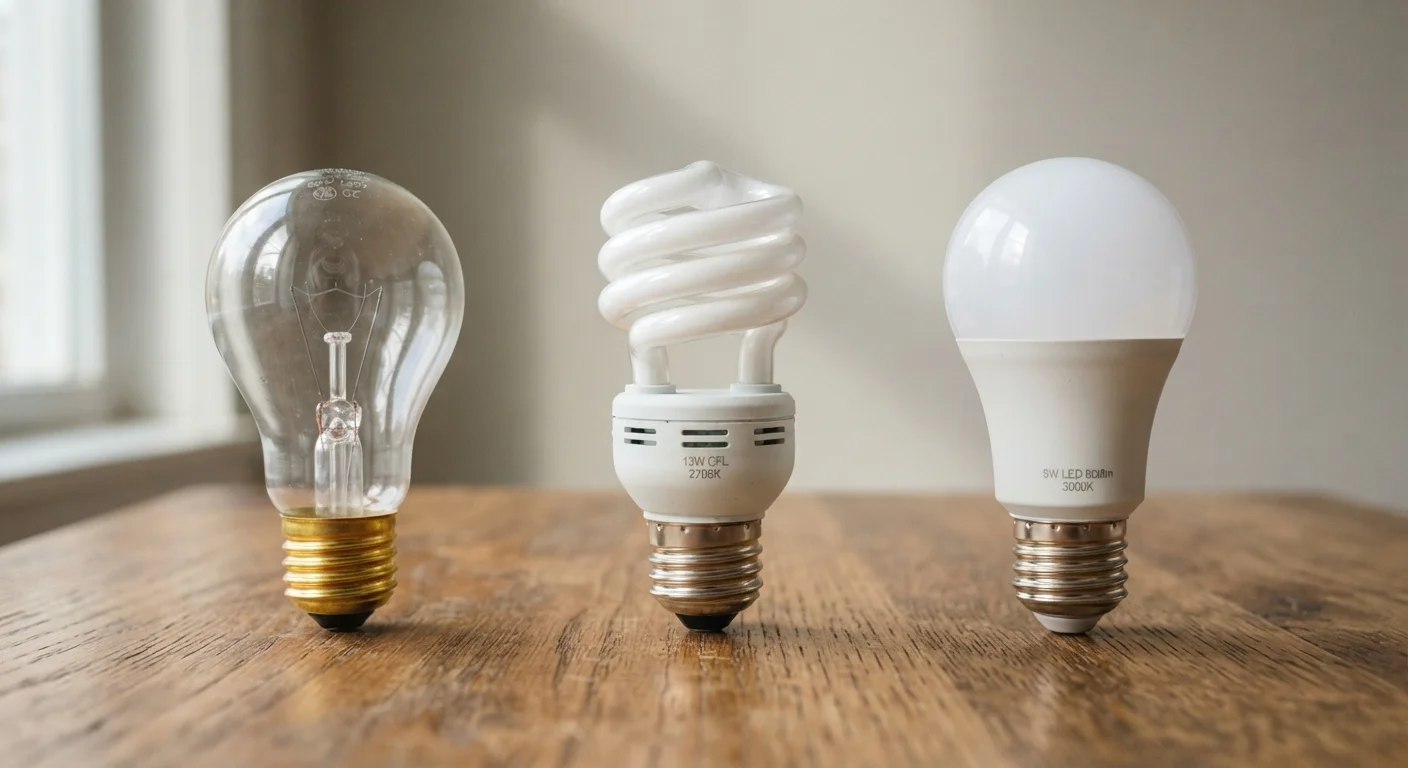
Photo: signaturehomeideas.com editorial
What separates these three bulb types
LED (light-emitting diode), CFL (compact fluorescent lamp), and incandescent bulbs all produce visible light, but they do it through different physical processes, and those differences affect everything from your electricity bill to how the light looks in a room.
An incandescent bulb passes electrical current through a thin tungsten filament until it glows. The process is simple but inefficient: roughly 90% of the energy becomes heat rather than light. A CFL passes current through a gas-filled tube, producing ultraviolet light that a phosphor coating converts to visible light. An LED passes current through a semiconductor, which releases light directly with very little heat as a byproduct.
Understanding that mechanism helps explain the numbers on the box. For a deeper look at what lumens, watts, and color temperature actually mean, see our guide to bulb specifications.
How they compare across the criteria that matter
The table below covers the practical factors homeowners encounter most often.
| Criterion | Incandescent | CFL | LED | |
|---|---|---|---|---|
| Typical lifespan | 1,000 hours | 8,000-10,000 hours | 15,000-25,000 hours | |
| Energy use (800 lm) | ~60 watts | ~13-15 watts | ~8-10 watts | |
| Heat output | Very high | Moderate | Low | |
| Warm-up time | Instant | Up to 3 minutes | Instant | |
| Dimmable | Yes, all | Most are not | Many are, check label | |
| Contains mercury | No | Yes (small amount) | No | |
| Color rendering (CRI) | 100 | 80-85 typical | 80-95 typical | |
| Currently available (US) | Limited, phasing out | Yes, declining | Widely available |
A few numbers worth unpacking: an LED bulb rated at 800 lumens typically draws about 8 to 10 watts. A CFL producing the same output draws roughly 13 to 15 watts. An incandescent bulb producing 800 lumens draws about 60 watts. The efficiency gap between incandescent and LED is large enough that a household running ten fixtures can see a meaningful reduction in lighting-related electricity use by switching.
Heat output and fixture compatibility
Incandescent bulbs run hot enough to be a burn hazard if touched shortly after use, and they can exceed the maximum wattage rating of some older fixtures. CFL bulbs run cooler but still produce noticeable heat at the base. LED bulbs generate little heat at the light-emitting end, though their driver circuitry at the base does warm up.
Enclosed fixtures (recessed cans with glass covers, outdoor lanterns with sealed globes) trap heat around the bulb. Not all LED bulbs are rated for enclosed fixtures; using an incompatible bulb in one shortens its lifespan and can void any warranty. Look for "enclosed fixture rated" on the packaging when that applies to your situation.
Check the fixture's maximum wattage label
Disposal and environmental considerations
CFL bulbs contain a small amount of mercury, typically 3 to 5 milligrams per bulb. That amount is far below what older fluorescent tubes contain, but it still means CFLs cannot go in household trash in most US states. Many hardware stores accept them through take-back programs, and the EPA's Lamp Recycling guidance lists options by location. A broken CFL indoors warrants ventilation and careful cleanup; the EPA publishes specific instructions for this.
LED bulbs contain no mercury. They do include small amounts of other materials (lead solder in some older designs, electronic components) that make recycling preferable to landfill disposal, but the urgency is lower than with CFLs. Incandescent bulbs contain no hazardous materials and can go in regular trash.
Misconceptions about these trade-offs are common. Common lighting myths covers several that affect how homeowners approach bulb choices.
Dimming, color rendering, and warm-up time
Incandescent bulbs dim smoothly across the full range on any standard dimmer switch and have a color rendering index (CRI, a measure of how accurately a light source reveals the true colors of objects) of 100, the theoretical maximum. CFL bulbs dim poorly on most residential dimmers and take 30 seconds to several minutes to reach full brightness in cold conditions. Many CFL bulbs are labeled "not dimmable."
LED bulbs vary. Most modern LED bulbs dim well, but some produce flicker or buzz when paired with older leading-edge dimmers designed for incandescent loads. If dimming matters to you, look for LED bulbs explicitly labeled as compatible with your dimmer type, or consider replacing the dimmer switch with one rated for LED loads. The path to smart, controllable lighting often starts here; smart lighting systems build on this foundation with additional considerations.
CRI for LED bulbs typically falls between 80 and 95 depending on the product. For task lighting in kitchens or workspaces, a CRI of 90 or above produces noticeably truer color.
The content provided on our blog site traverses numerous categories, offering readers valuable and practical information. Readers can use the editorial team’s research and data to gain more insights into their topics of interest. However, they are requested not to treat the articles as conclusive. The website team cannot be held responsible for differences in data or inaccuracies found across other platforms. Please also note that the site might also miss out on various schemes and offers available that the readers may find more beneficial than the ones we cover.