

Seasonal Home Storage: Rotating What You Own Without Losing Your Mind

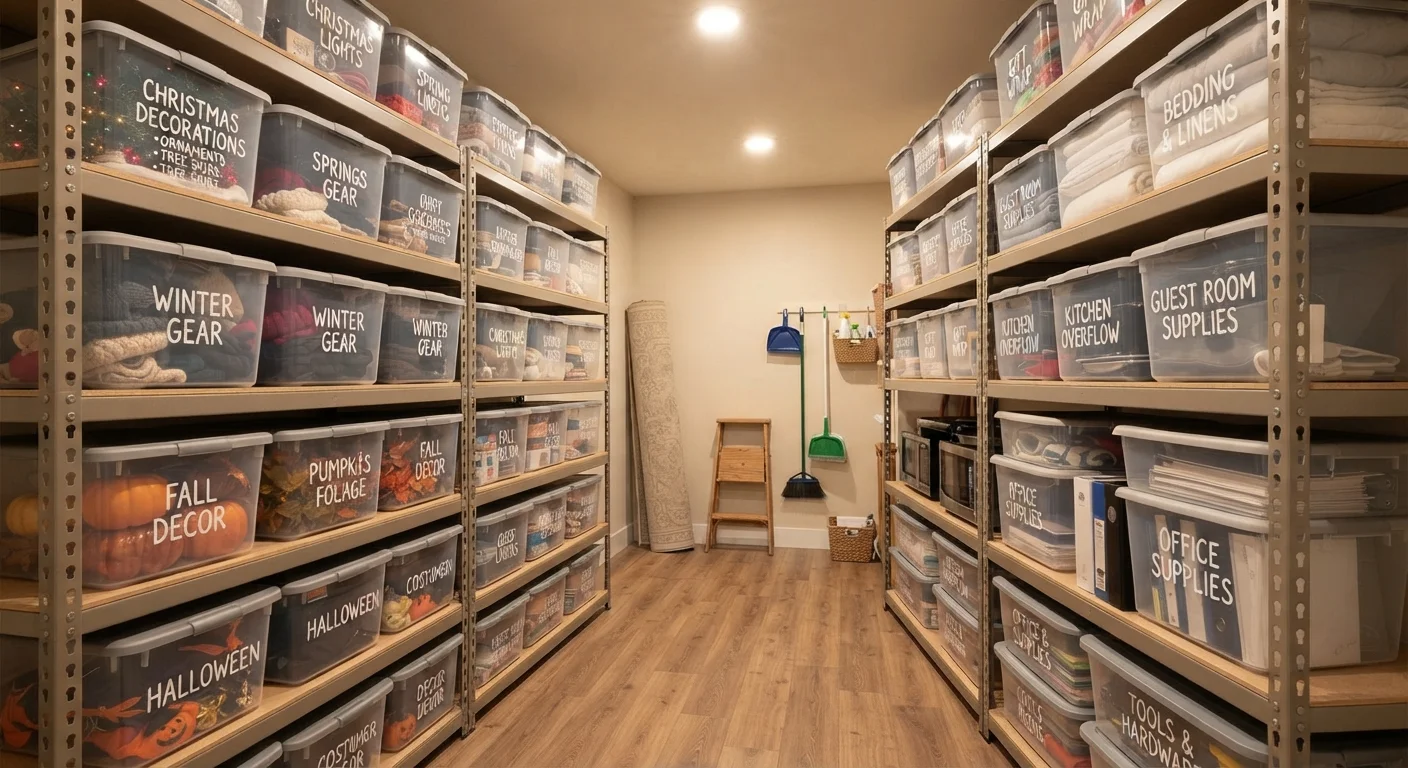
Photo: signaturehomeideas.com editorial
Key Takeaways
- Assign fixed storage zones by season so you always know where to look first.
- Label containers with contents, season, and room to cut retrieval time significantly.
- Clean and dry every item before storing it to prevent mold, odor, and pest damage.
- Conduct a brief audit each time you rotate so clutter does not accumulate over years.
- Vertical shelving in garages and closets frees floor space for active-use items.
Why seasonal rotation fails without a system
Most households own items that are only useful part of the year: holiday decorations, heavy winter bedding, patio cushions, snow gear, or garden tools. Without a clear plan, these things end up stuffed wherever space exists, and by the next season, no one remembers where they went. The result is duplicate purchases, damaged goods found too late, and hours lost to searching.
A rotation system does not need to be elaborate. It needs to be consistent. Three things drive whether a system holds up over multiple years: a predictable container format, a labeling convention everyone in the household understands, and defined storage zones that do not get repurposed between rotations.
Attic and basement storage have limits
Building your container and labeling foundation
Uniform containers stack better, fit shelves more predictably, and signal at a glance that something belongs in storage rather than active use. Hard-sided plastic bins with locking lids work well for most seasonal categories because they resist moisture, stack without crushing, and accept adhesive labels cleanly. For soft goods like blankets or off-season clothing, vacuum-compression bags reduce volume and deter moths when used with cedar inserts or lavender sachets.
Labels should carry three pieces of information: the contents (specific, not vague), the season the contents belong to, and the room where items will be used. A label reading "Winter: master bedroom, flannel duvet + two wool throws" is far more useful than "Bedding." Apply labels to the short side of each bin so they remain visible when stacked.
Use a three-field labeling convention on every storage container
Clean every item before it goes into storage, not when it comes out
Dedicate fixed shelving zones to specific seasons
Audit each bin at every rotation for items unused in the last full cycle
Schedule rotations before the season change, not after
Assigning zones and using vertical space
Seasonal storage lives in garages, basements, attics, and closets. The simplest zone rule is to dedicate specific shelving sections to specific seasons, then rotate what is on the accessible lower shelves as the calendar changes. Items for the current season stay at waist height or below; off-season items go higher or toward the back.
If your garage is the primary storage site, the garage storage guide covers shelving configurations and zone layouts in depth. For households relying on closet space, organizing tight closets walks through layouts that carve out room for seasonal bins without displacing everyday items.
Attic and basement storage introduce climate concerns. Attics can reach extreme temperatures, which degrade adhesives, warp plastic, and damage fabrics. Basements carry humidity risk. In both cases, storing items in sealed containers and keeping them off the floor on pallets or shelving is the more reliable approach.
The rotation process itself
Schedule rotations to coincide with predictable seasonal transitions rather than waiting until you need something urgently. Doing a swap in early October, before the first cold snap, is far less stressful than digging for winter coats the night temperatures drop.
Each rotation has four steps. First, pull the incoming season's bins and inspect contents before putting anything into use. Second, clean, dry, and repair outgoing items before they go into storage. Third, audit each bin for items you did not use at all last season; those are candidates for donation or disposal. Fourth, reseal and re-label any containers whose labels have faded or whose contents have changed.
The audit step is where long-term clutter control happens. A bin of holiday decorations that has not been opened in three years is not a storage asset; it is stored indecision. Each rotation is a low-pressure moment to make that call without the urgency of an active season.
Category-specific storage notes
Holiday decor: Wrap breakables individually in newsprint or foam sleeves rather than relying on the original retail packaging, which deteriorates. Store string lights in a coiled loop around a piece of cardboard to prevent tangling.
Seasonal clothing: Wash all garments before storing. Body oils and food residue attract insects and cause fabric yellowing. Cedar blocks or sachets can deter moths without the chemical odor of mothballs.
Outdoor cushions and textiles: Clean thoroughly and dry completely before storage. Even slight moisture leads to mildew. Store in breathable fabric bags rather than sealed plastic where airflow is possible.
Garden and outdoor tools: Drain hoses, sharpen blades, and apply a light coat of oil to metal surfaces before putting tools away for winter. Hanging tools on wall-mounted hooks (rather than laying them flat) prevents handle warping and blade dullness from floor contact.
For households managing both storage and a broader refresh of living spaces, the room-by-room furniture checklist pairs well with a seasonal rotation because both tasks benefit from the same systematic, room-at-a-time approach.
The content provided on our blog site traverses numerous categories, offering readers valuable and practical information. Readers can use the editorial team’s research and data to gain more insights into their topics of interest. However, they are requested not to treat the articles as conclusive. The website team cannot be held responsible for differences in data or inaccuracies found across other platforms. Please also note that the site might also miss out on various schemes and offers available that the readers may find more beneficial than the ones we cover.