

Getting Your Garage Under Control: Storage From Floor to Ceiling

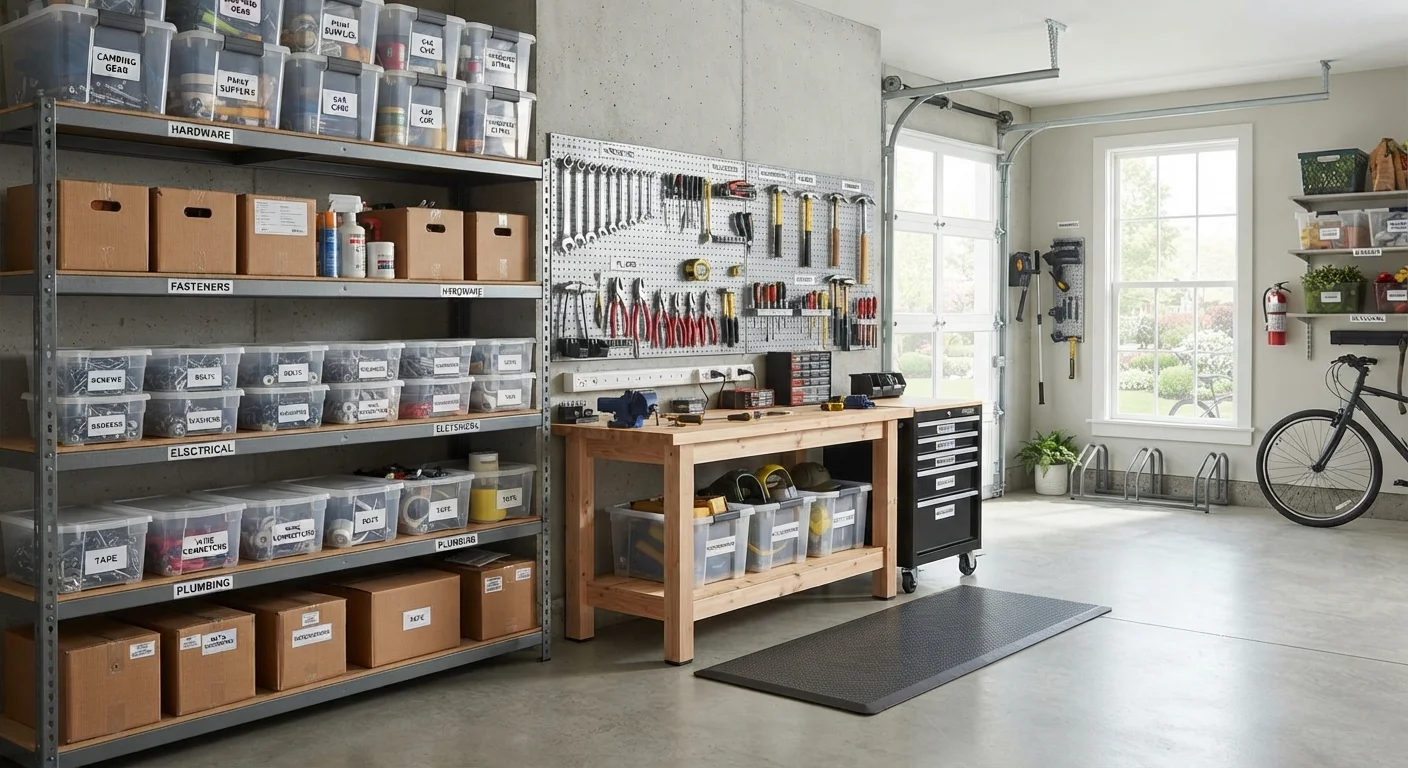
Photo: signaturehomeideas.com editorial
Key Takeaways
- Zoning your garage by activity type is the single most effective organizational move you can make.
- Wall-mounted storage frees floor space and keeps frequently used items within easy reach.
- Overhead storage works best for bulky, low-frequency items like seasonal gear and camping equipment.
- Clear labeled containers prevent the 'mystery box' problem that leads to duplicate purchases.
- A quarterly review habit stops clutter from rebuilding after an initial cleanout.
Why most garages fail at storage
Most garages accumulate clutter because items land there without any designated home. Tools end up on the floor, sports gear piles against a wall, and holiday boxes get stacked wherever space remains. The result is a space where nothing has a fixed address, so nothing gets put back consistently.
This is a spatial problem, not a willpower problem. Understanding why clutter accumulates helps explain the pattern: when a category of items lacks a clear home, every retrieval turns into a search, and every return becomes a negotiation with an already-full surface.
The fix starts before you buy a single shelf. A clear plan for what goes where changes how the whole space functions.
Dividing your garage into zones
Zones group items by how and when you use them. A practical garage typically needs four: a workshop or tool zone near an outlet and good lighting, a sports and recreation zone near the main door for quick access, a seasonal storage zone along a back or side wall, and a household overflow zone for things like extra paper goods or paint cans.
Draw a rough floor plan before moving anything. Measure the width of your car (or cars) and mark that space as protected. Everything else is available for storage. Place the zones you access daily closest to the entry points you actually use.
Map zones before buying anything
Once zones are mapped, label the floor with painter's tape during the first week. It sounds excessive, but it gives every household member a visible cue while new habits form.
Shelving and wall storage principles
Freestanding shelving units work for most garages and require no wall anchoring. If you use wall-mounted shelves, anchor them into studs, not just drywall. Check load ratings for any shelving you install; a shelf holding paint cans, power tools, and hardware carries significant weight.
Store items at eye level that you reach for weekly. Items used monthly go on lower shelves; items used once or twice a year go high. This sounds obvious, but most garages do the opposite: the least-used boxes end up at eye level because they arrived first.
Pegboards and slotted wall panels let you hang hand tools, cords, and small containers without using shelf depth. Vertical space across the home works by the same logic: walls are storage real estate that most rooms waste.
Use clear bins wherever possible. An opaque box labeled 'misc' becomes a black hole within six months. A clear bin labeled by specific category stays usable.
Overhead and ceiling storage
Ceiling-mounted platforms and pulley systems handle bulky, lightweight items well: camping gear, holiday decorations, folding chairs, foam pool toys. These items are large enough to consume shelf space but light enough to lift safely.
Before installing any ceiling storage, confirm that your ceiling joists can support the load. Most residential garage joists handle 10 to 20 pounds per square foot of storage, but verify with a structural reference or a qualified contractor if you are unsure. Never exceed the rated capacity of a ceiling storage system.
Pulley-based hoists for bicycles are common and practical. Install them so the bike clears your car roof with a few inches to spare. Rotating seasonal items in and out of overhead storage is easier when each item is in a labeled bag or container rather than loose.
Keeping it organized over time
An initial cleanout helps, but the garage reverts without maintenance habits. A quarterly 20-minute walkthrough is enough: check for items that drifted out of their zone, toss expired chemicals or broken tools, and return anything that was borrowed and came back to the wrong spot.
Two habits prevent most backsliding. First, apply a one-in, one-out rule to tools and sports equipment: when a new item arrives, an old equivalent leaves. Second, do not let the garage become a staging area for things you haven't decided about. Those undecided items will stay for years. The same principle applies to closets: indecision is what fills a space, not the volume of what you own.
A garage that stays organized does so because its layout makes putting things away easier than leaving them on the floor, not because everyone in the household suddenly developed perfect habits.
The content provided on our blog site traverses numerous categories, offering readers valuable and practical information. Readers can use the editorial team’s research and data to gain more insights into their topics of interest. However, they are requested not to treat the articles as conclusive. The website team cannot be held responsible for differences in data or inaccuracies found across other platforms. Please also note that the site might also miss out on various schemes and offers available that the readers may find more beneficial than the ones we cover.