

Cabinet Refacing vs. Cabinet Replacement: Choosing the Right Path for Your Kitchen

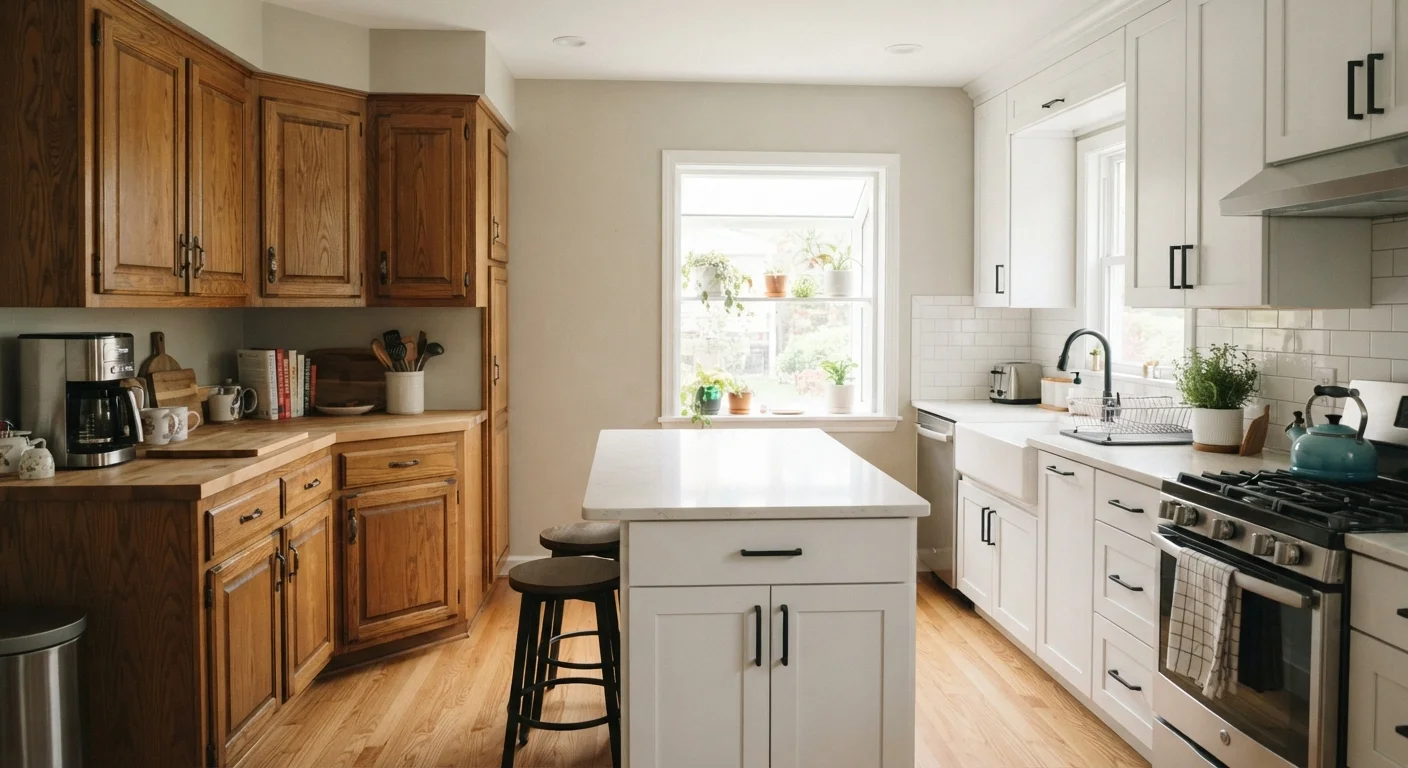
Photo: signaturehomeideas.com editorial
Key Takeaways
- Refacing replaces doors, drawer fronts, and veneers but leaves the cabinet boxes in place.
- Replacement involves removing all existing cabinets and installing new ones, often alongside layout changes.
- Refacing typically costs less and causes less disruption than full replacement.
- Replacement is the right call when boxes are structurally compromised or the kitchen layout needs to change.
- Both options require planning for countertops, plumbing, and appliance disconnection if any cabinets touch those systems.
- Local building codes may require permits for work that involves moving plumbing, electrical, or gas lines.
What each approach actually involves
Cabinet refacing means keeping every existing cabinet box in place and replacing only the visible surfaces: door panels, drawer fronts, and the thin veneer or laminate applied to the face frames and sides. Hardware gets swapped out at the same time. The result looks like new cabinetry because everything the eye lands on is new, but the underlying structure has not moved.
Cabinet replacement removes every box from the wall. New cabinets go in, usually chosen from stock, semi-custom, or custom lines, and the kitchen is effectively rebuilt from the wall out. This is the path that allows a homeowner to change where cabinets sit, how tall they run, and how storage is divided internally.
The distinction matters because the two options solve different problems. Refacing is a cosmetic fix. Replacement is a structural and spatial one. Confusing the two leads to spending money on the wrong solution.
When refacing makes sense
Refacing works well when the cabinet boxes are structurally sound: no soft spots, no warping from water exposure, no sagging shelves. If you tap on the box interiors and they feel solid, and if the doors close flush without the frames having shifted, the boxes are likely good candidates.
It also makes sense when the existing layout works for the household. If the sink, refrigerator, and range are positioned well and storage is adequate, there is no reason to rip everything out. A fresh door style and updated hardware can change the whole character of a kitchen without touching the plumbing or electrical.
For homeowners who want to avoid a lengthy renovation, refacing is the lower-disruption path. Most professional refacing jobs take two to five days. The kitchen stays mostly functional throughout. See our guide to durable cabinet paint finishes if you are also considering a painted finish as part of the refresh.
When replacement is the better call
Replacement becomes necessary when the cabinet boxes themselves are the problem. Water damage from a slow leak under the sink, for instance, can compromise the particle board or plywood that forms the box walls and floor. Putting new doors on a soft, swollen box does not fix the damage; it hides it temporarily.
Layout changes require replacement. If you want to move the sink, extend an upper cabinet run to the ceiling, add an island, or reconfigure a corner, none of that is possible within a refacing project. The boxes have to come out before anything can move.
Full replacement also opens up more material and configuration choices. Soft-close hinges, pull-out shelving, drawer inserts, and varied box depths are far easier to incorporate when starting from scratch. For a broader look at what a kitchen overhaul involves, the kitchen renovation planning guide covers layout decisions, permits, and trade coordination in detail.
Cost, permits, and what to ask a contractor
Refacing costs less across the board: fewer materials, less labor, no disposal fees for old boxes. Replacement costs more, and the gap widens when layout changes require a plumber or electrician to move lines. Permits are rarely needed for refacing. Replacement that involves moving a gas line, water supply, or electrical circuit will typically require a permit and inspection in most U.S. jurisdictions. Verify requirements with your local building department before work begins.
When getting contractor estimates, ask specifically whether the quote includes disposal of existing cabinets, whether countertop removal is included, and who is responsible for patching walls after installation. These items vary between quotes and can shift the total considerably. The kitchen renovation planning guide has a checklist of questions worth bringing to any contractor conversation. For homeowners doing a broader room-by-room update, the room-by-room furniture refresh checklist can help keep other spaces on track while the kitchen project runs.
The content provided on our blog site traverses numerous categories, offering readers valuable and practical information. Readers can use the editorial team’s research and data to gain more insights into their topics of interest. However, they are requested not to treat the articles as conclusive. The website team cannot be held responsible for differences in data or inaccuracies found across other platforms. Please also note that the site might also miss out on various schemes and offers available that the readers may find more beneficial than the ones we cover.