

Why Your Living Room Always Feels Too Dark or Too Harsh

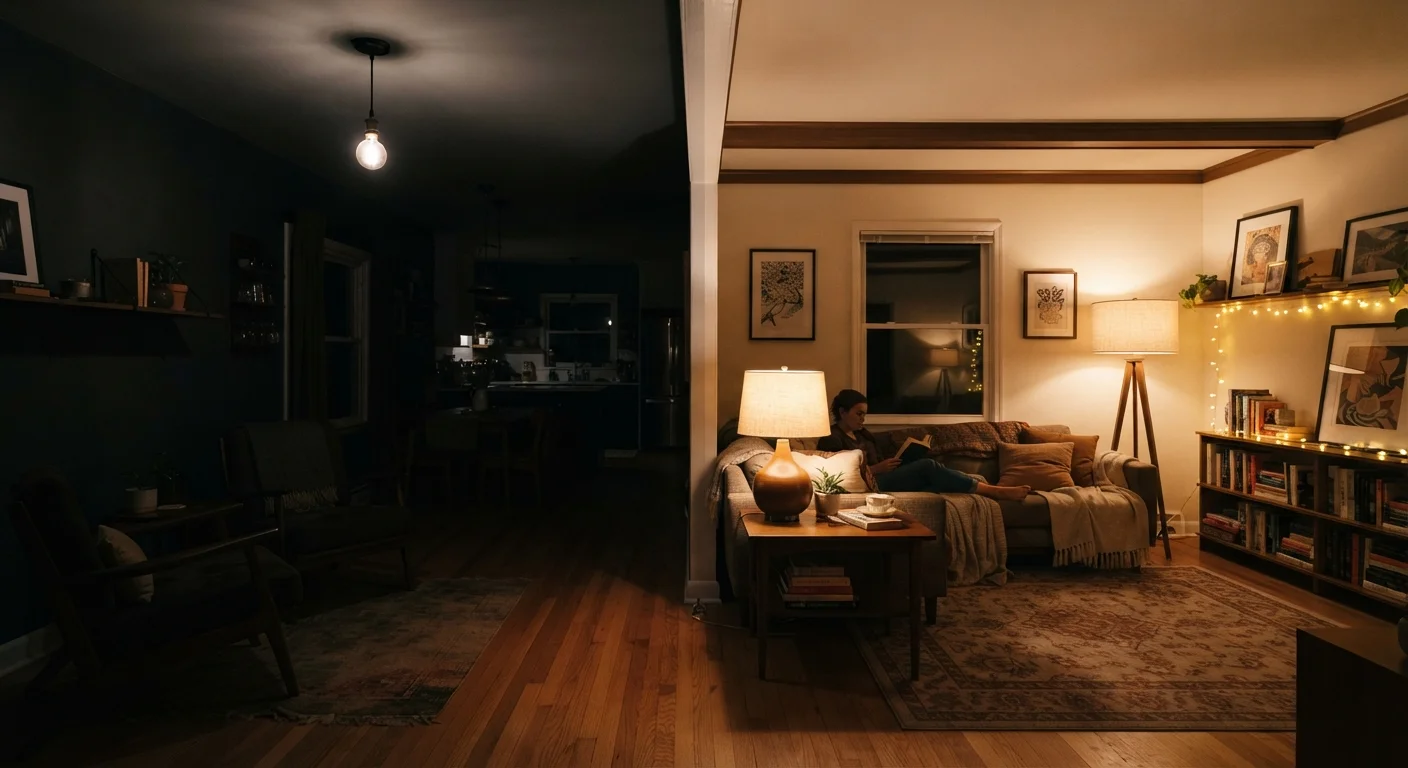
Photo: signaturehomeideas.com editorial
Key Takeaways
- A single overhead fixture creates shadows and glare because it only lights from one angle.
- Bulb color temperature affects whether a room feels cold or uncomfortably bright.
- Layering ambient, task, and accent light sources fixes most living room lighting problems.
- Dimmer switches give you control over intensity without rewiring or replacing fixtures.
- Lamp placement relative to seating and walls matters as much as wattage.
What's actually causing the problem
Most living rooms rely on one ceiling fixture, often a basic flush mount or a recessed can, to do all the work. That setup almost always produces the same result: a bright pool directly below the light and growing darkness everywhere else. Corners go dim, faces look shadowed from below, and the room swings between feeling cave-like and glaring depending on the bulb inside.
The fix rarely requires rewiring. In most cases, the room needs more light sources placed at different heights, and bulbs matched to the purpose of each zone. The three-layer lighting approach gives a practical framework for thinking about this: ambient light for general illumination, task light where you read or work, and accent light to define the shape of the space.
The mistakes below are the most common reasons living rooms stay stubbornly dark or harsh, and each one has a straightforward correction.
Relying on a single overhead light for the entire room.
Using bulbs with the wrong color temperature.
Placing all lamps against walls instead of near seating.
Skipping dimmer switches and running all lights at full intensity.
Mixing bulb color temperatures across fixtures in the same room.
Ignoring reflected light from walls and ceilings.
Getting the details right
Two issues come up often enough to deserve extra attention. First, dimmers: many homeowners assume their existing LED bulbs will work with any dimmer switch. They won't. Older dimmer switches designed for incandescent bulbs can cause LEDs to flicker or buzz at low settings. Check that your dimmer is rated for LED loads, or replace it with one that is. This is a low-voltage switch swap most confident DIYers can handle, but if you're unsure about your panel or wiring, a licensed electrician is the right call.
Second, lamp shades: a shade that is too opaque or too small blocks most of the light and makes a lamp nearly useless as a room brightener. A wider shade with a lighter interior lining spreads light more broadly. This is an inexpensive change that often has more impact than swapping bulbs.
For more on widespread beliefs that lead to poor choices, the article on common home lighting myths is worth reading alongside this one. And if your living room also feels visually cramped, decor habits that shrink spaces covers how lighting interacts with furniture scale and layout.
This article is for informational purposes only. Any electrical work beyond bulb and shade replacement should be evaluated by a licensed electrician. Always verify local building codes before making changes to fixed wiring or switches.
The content provided on our blog site traverses numerous categories, offering readers valuable and practical information. Readers can use the editorial team’s research and data to gain more insights into their topics of interest. However, they are requested not to treat the articles as conclusive. The website team cannot be held responsible for differences in data or inaccuracies found across other platforms. Please also note that the site might also miss out on various schemes and offers available that the readers may find more beneficial than the ones we cover.