

Indoor Plants as Decor: Matching Greenery to Light, Space, and Style

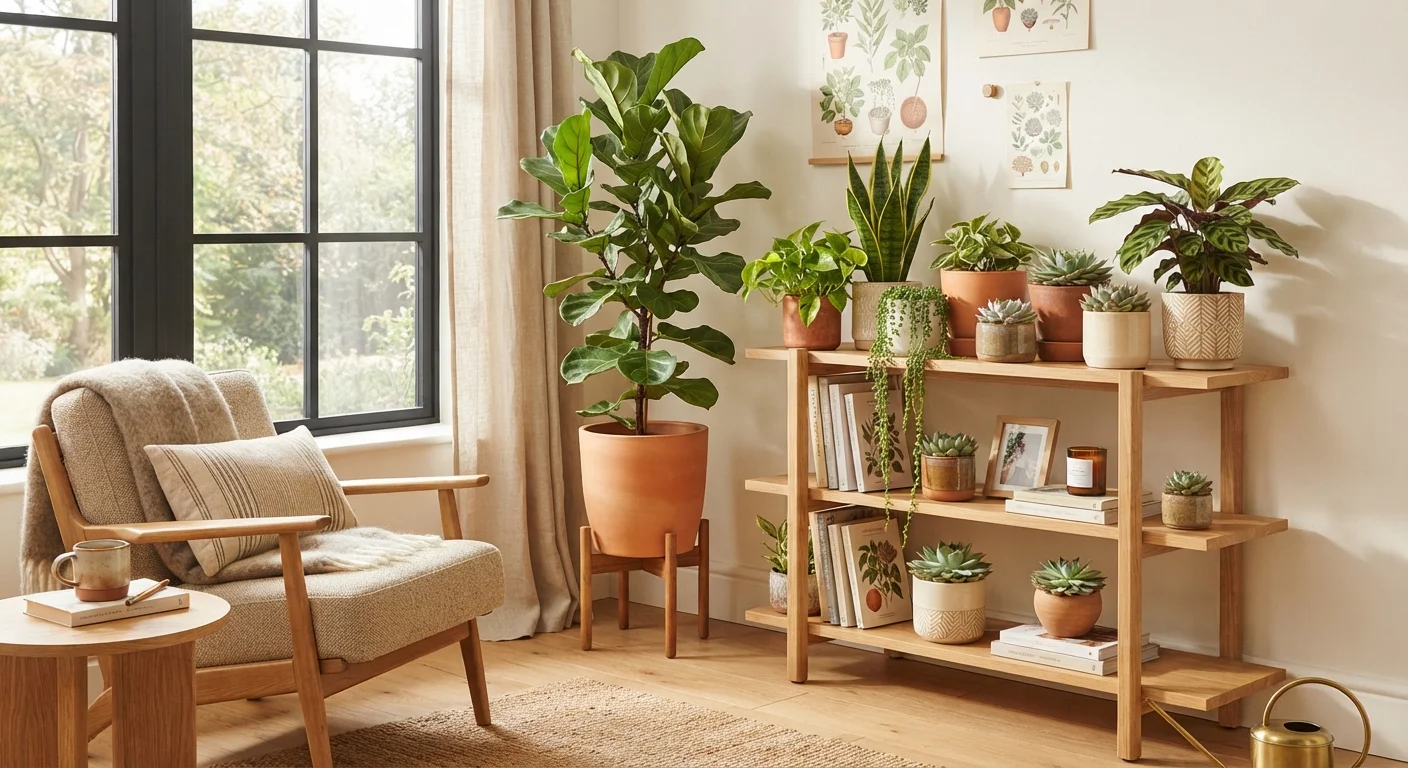
Photo: signaturehomeideas.com editorial
Key Takeaways
- Observe actual hours of direct and indirect sun in a spot before choosing a plant for it.
- Plant scale should relate to furniture and room proportions the same way art and accessories do.
- Overwatering is more often the cause of houseplant decline than underwatering.
- Pot material and finish affect both plant health and how the plant reads against your decor palette.
Reading the light in your home
Light is the single factor behind most indoor plant failures. A room that feels bright to you may deliver far less direct sun than a plant label assumes. Before buying anything, spend a day noting where direct sun falls on the floor, how many hours it lasts, and how far from the window it reaches.
South-facing windows in the Northern Hemisphere receive the most direct light throughout the day. North-facing windows provide diffuse, indirect light that suits low-light species. East windows offer gentle morning sun; west windows carry strong afternoon heat. A spot two feet from a sunny south window is bright-direct. Eight feet back in that same room may be low-light even if it does not feel dim to you. Understanding how light moves through a room can sharpen those observations before you purchase a single plant.
Scaling plants to the space
A six-foot floor plant in a small bedroom crowds the floor plan and competes with furniture. A two-inch succulent centered on a large dining table disappears visually. Scale matters as much here as it does with any other decor object. Small rooms need proportional choices across furniture, art, and plants alike.
As a practical guide: plants taller than 30 inches work in floor corners or alongside large furniture. Trailing plants such as pothos or string of pearls suit shelves and high ledges where their length hangs freely. Compact upright forms like snake plants and ZZ plants work on side tables without overwhelming the surface. Before purchasing, set a box of similar dimensions in the intended spot and live with it for a day to confirm the scale feels right. You can also reference a room styling checklist to map plant placement alongside furniture and lighting before committing.
Matching plants to your decor style
Plant silhouette and pot finish can reinforce a room's existing palette and mood. Architectural plants with strong vertical or sculptural forms, such as snake plants, cast iron plants, and monsteras, read well in contemporary and minimalist spaces. Soft, trailing forms suit casual, layered rooms. Terracotta pots warm up neutral palettes; matte ceramic in white or slate holds a more modern edge. Consider the color temperature of your room when choosing pot glazes, because a warm amber pot in a cool-toned room creates friction that undercuts both elements.
Observe light conditions for a full day before choosing a plant
Match pot diameter to the plant's root ball, not to the decorative space
Group plants with similar water needs on the same surface
Include plant footprints in your floor plan sketch before finalizing placement
Keeping plants looking their part
A struggling plant undercuts every decorating intention. Yellowing leaves, leggy growth, and wilting signal wrong conditions, not bad luck. The most common error is overwatering combined with a pot that does not drain freely.
Check soil moisture before watering: for most tropical houseplants, the top inch of soil should be dry first. Wipe dust from large leaves monthly so the plant absorbs light efficiently. Rotate pots a quarter turn every few weeks to keep growth symmetrical. If a plant loses its shape despite consistent care, the likely cause is insufficient light, and moving it closer to a window by even four to six feet can reverse the decline without any other change.
The content provided on our blog site traverses numerous categories, offering readers valuable and practical information. Readers can use the editorial team’s research and data to gain more insights into their topics of interest. However, they are requested not to treat the articles as conclusive. The website team cannot be held responsible for differences in data or inaccuracies found across other platforms. Please also note that the site might also miss out on various schemes and offers available that the readers may find more beneficial than the ones we cover.